The Importance of Stamping in Sheet Metal Fabrication: A Comprehensive Guide for B2B Buyers
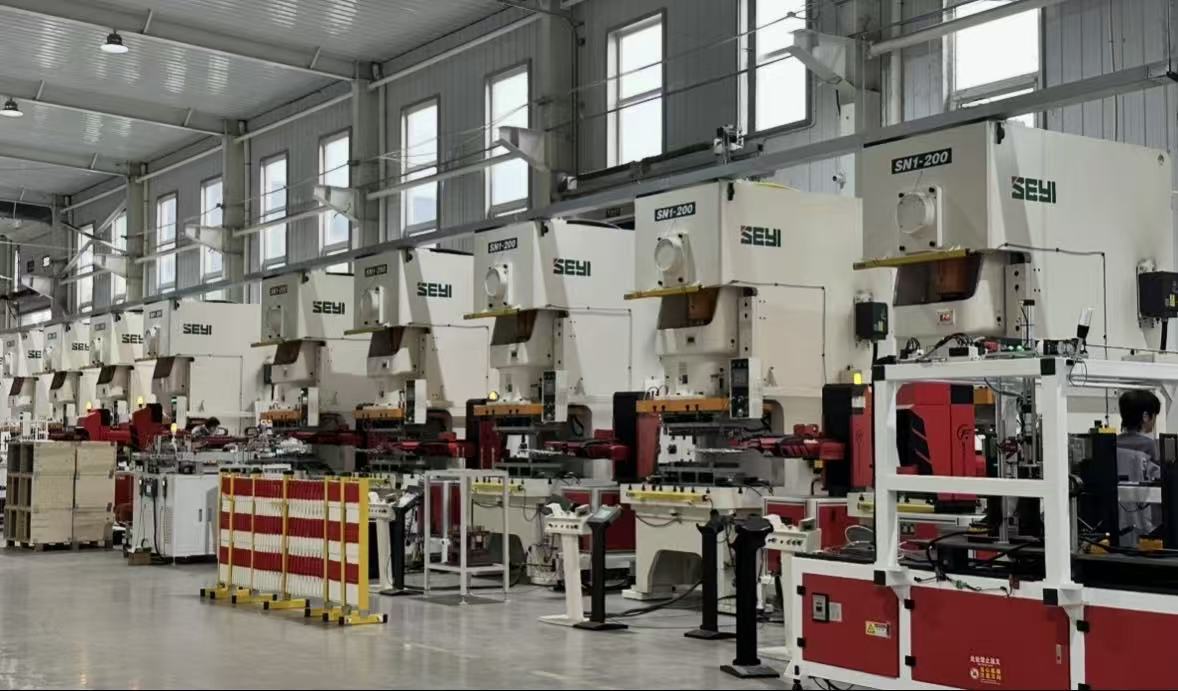
The Global Stamped Parts Market: Scale, Structure, and Growth Drivers
The market size of stamping directly reflects its foundational role in manufacturing. In 2025, the global stamped parts industry reached approximately USD 385 billion, growing 4.2% year-over-year. According to Research and Markets, the global metal stamping market was valued at approximately USD 223.2 billion in 2025 and is projected to reach USD 258.9 billion by 2030, representing a CAGR of about 3.8%. Despite differences in statistical scope, both sources point to the same trend: stamping is a mature market that continues to expand.
The automotive sector is the largest end-user of stamped parts, accounting for roughly 62% of demand, with home appliances and electronics combined representing about 21%. Each passenger vehicle uses an average of approximately 178 stamped parts, while commercial vehicles use about 132. Notably, new energy vehicles use approximately 23% more stamped parts per unit than conventional internal combustion vehicles, with the increment mainly coming from battery pack housings, busbars, and electric drive system components. This means that as global electrification accelerates, the demand structure for stamped parts is undergoing a qualitative shift.
In terms of regional dynamics, Asia-Pacific accounted for 57.3% of global stamped parts output in 2025. China, with a market size exceeding USD 120 billion, holds approximately 31.2% of the global share, with a year-over-year growth rate of 5.8%—significantly higher than North America and Europe. The European market, driven by carbon emission regulations, saw the proportion of aluminum alloy and high-strength steel stamped parts rise from 34% in 2020 to 51% in 2025. For buyers, understanding these regional differences helps in developing more resilient supply chain strategies.
The Technical Core of Stamping: Balancing Efficiency and Precision
The reason stamping has become the preferred process for high-volume sheet metal fabrication lies in its unique techno-economic characteristics.
Tooling-Driven Volume Efficiency
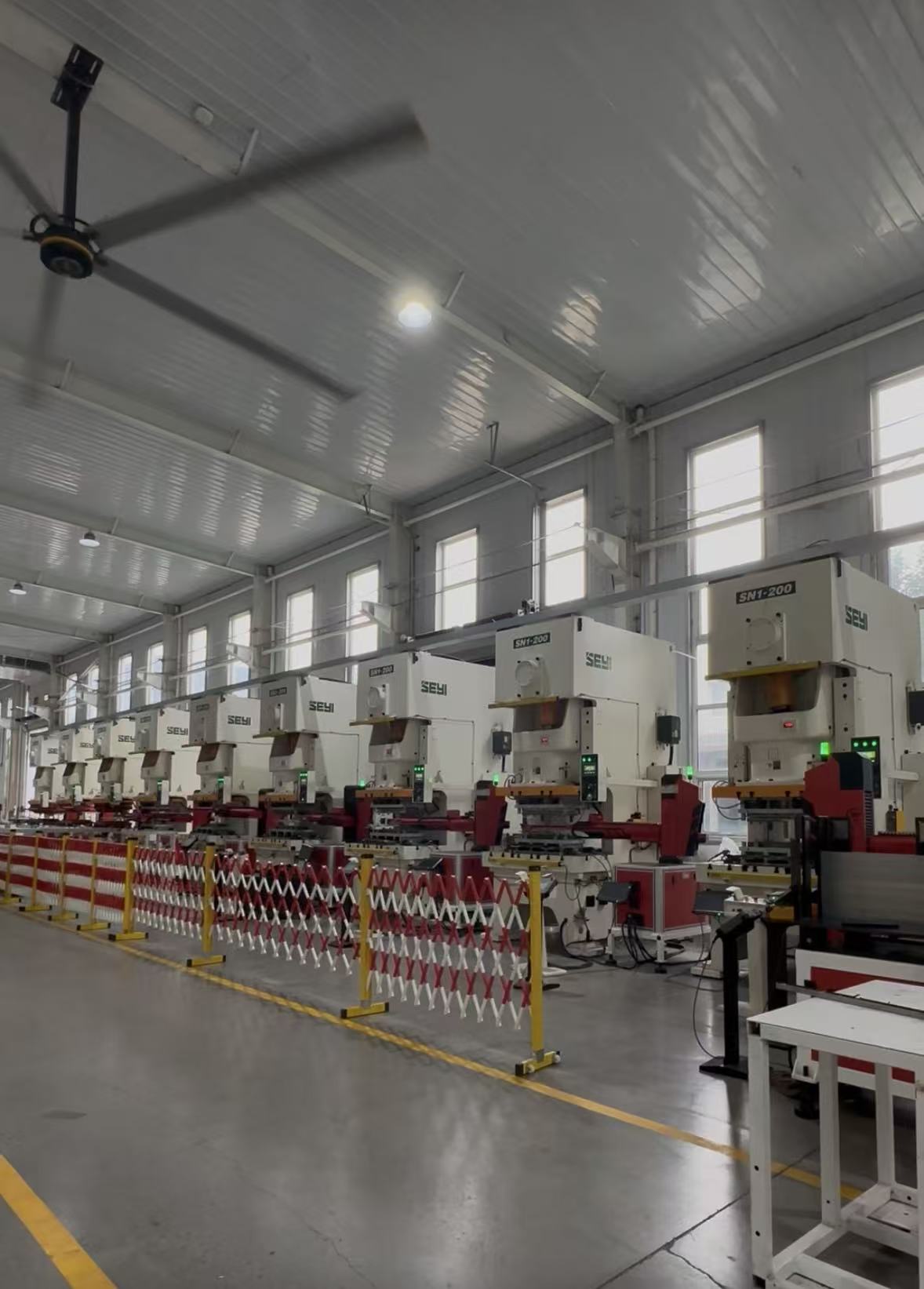
The core tool of stamping is the die set, composed of key components including the punch, die block, stripper plate, and guide pins. Once the die is installed and adjusted, the stamping press can operate at high speed with minimal manual intervention, producing one or more parts per stroke. This cost structure of "high upfront investment, extremely low marginal cost" means that once volume exceeds a certain threshold, the unit cost of stamping is far lower than piece-by-piece processes such as laser cutting or bending.
Take progressive die stamping as an example: coil stock passes sequentially through multiple stations within the die—piercing, trimming, bending, forming—to produce a complete part without manual transfer throughout the entire process. For sheet metal parts with annual demand ranging from tens of thousands to millions of units, progressive die stamping is virtually the only choice.
Precision Consistency and Material Utilization
Modern precision stamping can achieve tight tolerance control, meeting stringent dimensional requirements from miniature electronic connectors to medium-sized structural components. The selection of die steel—such as high-wear-resistant D2 tool steel or the balanced-toughness A2 steel—directly affects die life and the stability of part quality.
Material utilization is another hidden advantage of stamping. Through proper nesting design, coil stock can be maximized, with scrap rates significantly lower than piece-by-piece cutting processes. For expensive materials such as copper and aluminum, this advantage translates directly into cost savings.
Overview of Major Stamping Methods
Depending on part complexity and volume requirements, various stamping methods are available. Progressive die stamping suits high-volume, multi-operation parts with continuous coil feeding for maximum efficiency.Compound dies complete multiple operations at a single station, suitable for medium volumes and higher precision requirements. Transfer dies use mechanical arms to move workpieces between stations, applicable to larger parts requiring multi-step forming. Die material selection is equally critical: D2 tool steel, with its excellent wear resistance, is the industry standard for high-volume dies, while A2 steel offers a balance between toughness and wear resistance.
Design Principles for Manufacturability
For B2B buyers, the cost and quality of stamped parts are largely determined at the drawing stage. Understanding basic design-for-manufacturability (DFM) principles helps avoid potential risks before requesting quotes.
Bend radius is the most common DFM checkpoint. If the inside bend radius is less than 1x the material thickness, cracking on the outside surface is highly likely; an excessively large radius may cause springback control challenges. Hole-to-edge distance is equally critical—holes too close to the bend line may distort after forming, while those too close to the outer edge may deform the strip during blanking. A general recommendation is a minimum hole-to-edge distance of 1 to 2 times the material thickness.
Bend reliefs are particularly necessary when a bend line terminates near an edge, preventing material tearing or stacking at the corner. Additionally, buyers should avoid specifying excessively tight tolerances on non-functional surfaces—tolerances on stamped parts should be directly related to assembly function, as uniformly tightening them only drives up die costs and inspection expenses.
Industry Trends: Intelligent and Sustainable Manufacturing
The stamping industry is undergoing an efficiency upgrade driven by automation and digitalization. The theme of EuroBLECH 2026, "Smart and Sustainable Production for a Stronger Future," precisely captures this direction. AI-driven process monitoring, digital twin simulation, and robotic integration are moving from experimental stages to actual production line deployment. Leading enterprises have reduced average delivery cycles to 12 days and raised yield rates above 97.5% through intelligent scheduling systems.
Changes on the material side are equally profound. Patent applications for processes such as hot stamping of high-strength steel and cold stamping of aluminum alloy are growing at 14% annually, and patents for integrated die-casting and stamping hybrid processes for new energy vehicles have exceeded 2,200. These technological evolutions mean stamped parts can carry higher strength requirements at lighter weights, directly responding to the urgent lightweighting needs of the automotive and aerospace sectors.
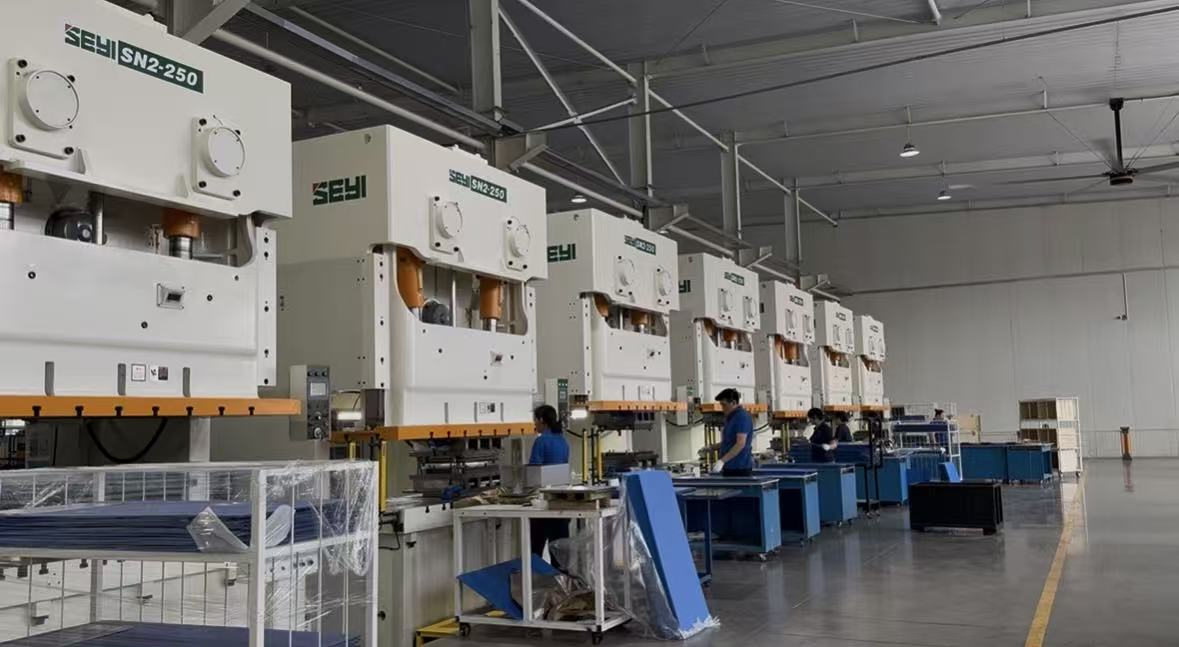
The proliferation of servo-driven presses and automated loading/unloading systems is further extending stamping's economic viability toward small and medium batch scenarios. For buyers with limited order volumes but high consistency requirements, this means more suppliers now possess economically feasible service capabilities.
Frequently Asked Questions from Buyers
Q: Is the upfront investment in stamping dies worthwhile?
It depends on total demand volume and part lifecycle. Die costs must be amortized into unit price. Taking progressive dies as an example, if annual demand reaches tens of thousands of units or more, the unit cost of stamping is typically significantly lower than piece-by-piece processing; however, if total demand is only a few hundred units, the die investment is difficult to recover. Buyers are advised to provide accurate annual usage and product lifecycle expectations for suppliers to conduct cost comparison analysis.
Q: What is the typical minimum order quantity for stamped parts?
It varies by supplier and process. Some Chinese suppliers accept single-piece prototyping, while minimum order quantities for mass production are mostly around 1,000 units, though specifics depend on material specifications and die complexity. For standard materials and simple shapes, the minimum threshold can be further reduced.
Q: What are the main disadvantages of stamping compared to laser cutting and bending?
The main drawbacks lie in die delivery lead time and design change costs. Stamping dies typically require several weeks from design to trial run, and once the part design is finalized, subsequent modifications may involve die rework or reconstruction. Therefore, stamping is best suited for high-volume production after design freeze, rather than the early prototyping stage with frequent iterations.
Q: How can I evaluate a stamping supplier's die capability?
The key is whether they possess in-house die design and manufacturing capabilities. Suppliers relying on outsourced dies are typically at a disadvantage in delivery control and problem response. Buyers can request die maintenance records, press tonnage ranges, and production case histories for similar parts.
Conclusion
The importance of stamping in sheet metal fabrication essentially stems from a deterministic exchange: trading upfront die investment for unparalleled efficiency, consistency, and unit cost advantages in high-volume production. Driven by multiple forces including automotive lightweighting, electronic miniaturization, and manufacturing intelligence, the boundaries of stamping technology continue to expand. For international B2B buyers, selecting a stamping partner with in-house die capabilities, DFM engineering support, and a verifiable delivery record is the critical path to gaining competitive advantage in this mature process.