Sheet Metal Manufacturing in the Digital Age: Where the Industry Is Heading
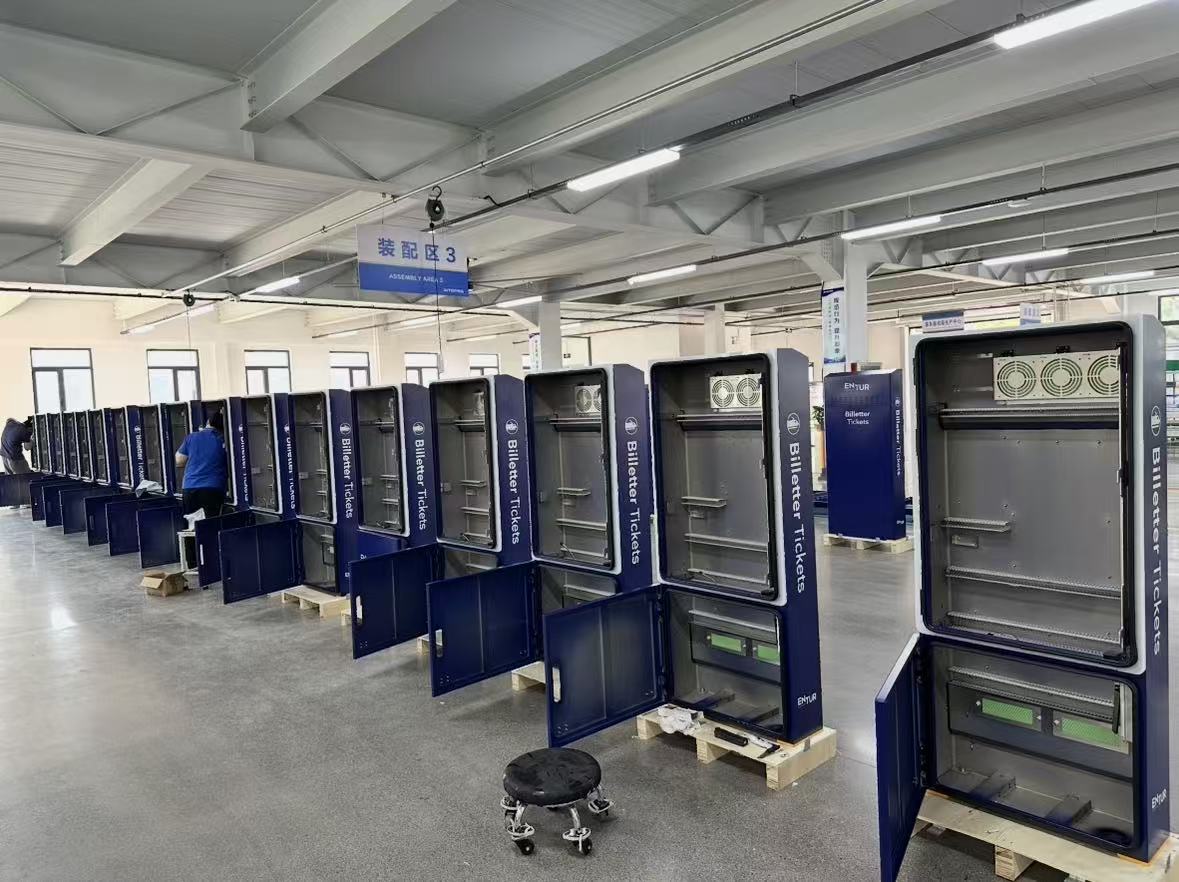
The global sheet metal fabrication services market is undergoing a profound structural transformation. In 2025, the market was valued at approximately USD 87.3 billion and is projected to reach USD 136.5 billion by 2035, growing at a compound annual growth rate of 4.6%. Behind these figures lies a more fundamental shift: sheet metal fabrication is no longer merely synonymous with "cutting and bending." It is steadily evolving into a high-technology service domain that integrates artificial intelligence, the industrial internet, and flexible automation.
For international B2B buyers, understanding the depth and breadth of this transformation is a prerequisite for selecting long-term partners and optimizing supply chain resilience.
I. Market Landscape: Asia-Pacific Leads, High-End Demand Diversifies
From a regional perspective, Asia-Pacific dominated with approximately 48.6% of global revenue share in 2025. China continues to hold a central position, supported by its vast flat steel output and broad downstream manufacturing base. India, driven by its "Make in India" policy, is expanding simultaneously across automotive, electronics, and infrastructure sectors, making it one of the fastest-growing markets. Meanwhile, sheet metal demand in North America and Europe exhibits distinct characteristics: the former has seen upstream capacity supported by trade protection policies, while downstream fabricators face persistent pressure from raw material cost volatility. The latter focuses on high-value-added segments—Italy and Spain maintain advantages in large machinery and architectural components, while Poland, the Czech Republic, and other Central and Eastern European countries are attracting increasing investment through skilled labor and cost efficiency.
Notably, aluminum's share in sheet metal applications is rising rapidly, and it is expected to become the fastest-growing material category through 2031 at a compound growth rate of 8.33%. EV battery trays, lightweight body structures, and electronic device thermal components are the primary drivers. This means sheet metal fabricators need the capability to process aluminum, copper, coated sheets, and other materials—not simply remain in the traditional comfort zone of carbon steel processing.
II. Technological Reconstruction: How AI and Automation Are Changing Production Logic
Information technology's transformation of the sheet metal industry has long surpassed the simple narrative of "machines replacing people." Current technological evolution presents three distinct layers.
Layer One: Standalone Machine Intelligence. A new generation of laser cutting machines equipped with AI cutting assistants can automatically analyze cut surface conditions and match processing parameters in real time, significantly reducing dependence on operator experience. Laser angle measurement systems in the bending stage have stabilized accuracy within ±0.3°, combined with on-demand hydraulic systems for faster dynamic response. These advances mean the economics of small-to-medium batch, high-variety orders are improving.
Layer Two: Human-Machine Collaborative Flexible Cells. The intersection of academic research and engineering practice has given rise to more adaptive production models. Taking the Metabend hybrid workflow as an example, collaborative robots handle sheet identification and handling, while augmented reality interfaces guide operators through bending sequences. This enables production of highly differentiated panels at a takt time of approximately 1.6 minutes per piece while still achieving acceptable geometric accuracy. This "lightweight digitalization" path is particularly friendly to mid-sized fabricators with limited capital—significant capability upgrades can be achieved without investing in fully automated production lines.
Layer Three: Data-Driven Process Intelligence. On-site data modeling is changing the way process decisions are made. Signals collected by sensors—cycle time, force, acoustic emission, temperature—are converted through neural networks and hybrid models into actionable process insights, demonstrating superior accuracy over traditional methods in material consistency and tool wear prediction. At the software level, integrated systems for automatic nesting and robotic palletizing can now achieve continuous "cutting without stopping" operations, with software uniformly scheduling robots and logistics paths.
III. The Digital Context of Manufacturing Processes
Understanding the technological evolution of sheet metal fabrication requires a basic awareness of its core processes. Typical sheet metal manufacturing encompasses cutting (laser, plasma, or stamping), forming (bending, stamping, or roll forming), joining (welding, riveting, or threaded fastening), and surface treatment. In the information technology context, each stage is assigned new coordinates:
In cutting, AI parameter adaptation reduces trial-and-error, while nesting algorithms improve material utilization by 10% to 15%;
In bending, digital twin technology makes virtual commissioning possible, greatly increasing first-part-correct probability;
In welding, L3 "conditional automation" has entered practice, with systems autonomously completing most tasks and operators intervening only under abnormal conditions;
In quality verification, machine vision combined with AI enables inline inspection, replacing traditional sampling methods.
The core of this shift is that the "knowledge" in manufacturing no longer exists solely in the minds of veteran technicians—it is encoded as reusable, transferable algorithmic and data assets.
IV. Buyer Concerns: New Dimensions in Supplier Evaluation
For international B2B procurement teams, sheet metal supplier evaluation criteria are extending from "price and lead time" to "capability and resilience." Industry research indicates that buyers increasingly focus on engineering support capability, quality documentation completeness, material traceability, and production flexibility—not merely unit quotations. Fabricators with the following characteristics are more likely to become long-term reliable partners:
Certification and compliance systems: Beyond ISO frameworks, qualifications specific to industries (IATF for automotive, AS9100 for aerospace) are increasingly becoming entry barriers;
Digital traceability capability: Full-chain data records from raw material batch to finished product dimensions;
Multi-material processing experience: Particularly accumulated expertise in aluminum, stainless steel, and coated materials;
Engineering collaboration interface: Ability to accept CAD data and provide design-for-manufacturability feedback.
Frequently Asked Questions (FAQ)
Q: What is AI's actual role in sheet metal fabrication? Is it just a marketing concept?
AI applications in sheet metal have entered a practical phase, not conceptual hype. The most mature applications currently focus on cutting parameter adaptation, bending angle compensation, and visual inspection. For example, AI cutting assistants can analyze cross-section quality and automatically adjust power and speed, enabling even less-experienced operators to produce consistent quality output. For buyers, this means supplier output consistency has technical safeguards, reducing over-reliance on individual technician expertise.
Q: Do small and mid-sized fabricators possess digitalization capabilities? How can buyers assess this?
Not all fabricators need fully automated production lines to achieve digitalization. Hybrid human-machine collaboration models (such as collaborative robots with AR guidance) have proven capable of achieving flexible production capacity with lower investment. When evaluating suppliers, consider whether they use digital quotation systems, whether they have CAD/CAM data integration capabilities, and whether they can demonstrate digital traceability records.
Q: What are the fundamental differences between aluminum and carbon steel processing?
Aluminum's reflectivity, thermal conductivity, and ductility differ significantly from carbon steel, imposing different requirements on laser cutting parameters, bending springback compensation, and welding processes. Fabricators with dedicated aluminum capabilities typically need specialized optical configurations and process databases. As EV and electronic device demand grows, aluminum processing capability is becoming an important indicator distinguishing supplier tiers.
Q: How should international buyers assess delivery risk for cross-border sheet metal suppliers?
Consider three dimensions: Material source stability—whether the supplier has diversified sheet procurement channels; Capacity elasticity—whether they can rapidly adjust scheduling during demand fluctuations; Digital collaboration level—whether order progress and quality reports are accessible online in real time. Industry data shows that fabricators investing in ERP-MES integration and real-time production visualization demonstrate superior on-time delivery performance.
Conclusion
Information technology's transformation of the sheet metal industry is fundamentally an upgrade of "certainty." When cutting precision no longer depends on feel, when bending angles are laser-corrected in real time, when welding paths are autonomously planned by AI, sheet metal fabrication is gradually transforming from a "craft" into a predictable, traceable, and optimizable engineering system. For international B2B buyers, selecting suppliers that translate technological investment into actual manufacturing capability means shorter development cycles, more stable batch quality, and stronger supply chain resilience. When evaluating potential partners, consider shifting your gaze from the price list to their equipment ecosystem, data capabilities, and engineering team—that is where the real answers about delivery performance over the next three to five years reside.