How Laser Cutting Is Reshaping the Sheet Metal Fabrication Industry: A Global B2B Buyer's Guide
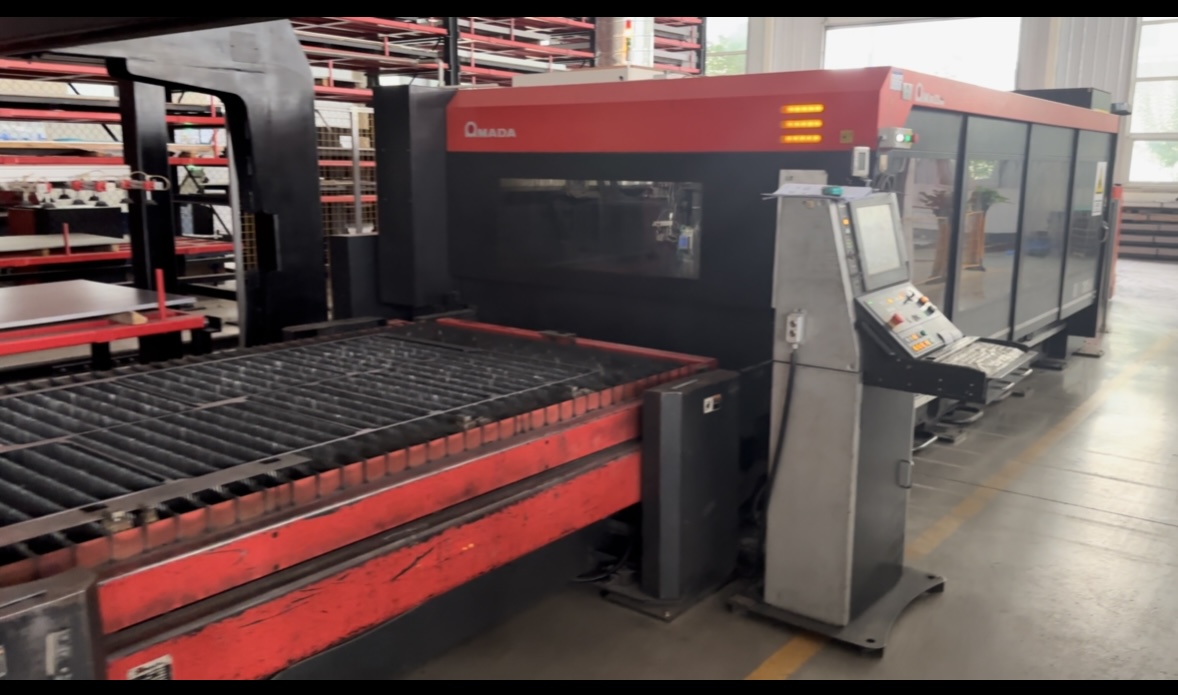
Why Laser Cutting Is Redefining Metal Manufacturing
For global B2B procurement teams, the criteria for evaluating sheet metal fabrication suppliers are undergoing a fundamental shift. In the past, lead time and price were the core decision variables; today, consistency of cutting precision, responsiveness to high-mix orders, and supplier automation levels are becoming more critical screening factors.
Behind this shift is the systematic reshaping of the sheet metal fabrication industry by laser cutting technology.
According to market research data, the global laser cutting machine market was valued at approximately USD 6.8 billion in 2025 and is projected to grow to USD 16.9 billion by 2035, representing a compound annual growth rate (CAGR) of 9.6%. Over the same period, the global sheet metal fabrication services market is expected to grow from USD 87.3 billion to USD 136.5 billion, at a CAGR of 4.6%. The growth rate of laser cutting equipment significantly outpaces that of the downstream fabrication services market, indicating that manufacturers are accelerating the internalization of laser capabilities or prioritizing suppliers with laser processing capacity.
The Three Core Values of Laser Cutting
Precision and Edge Quality
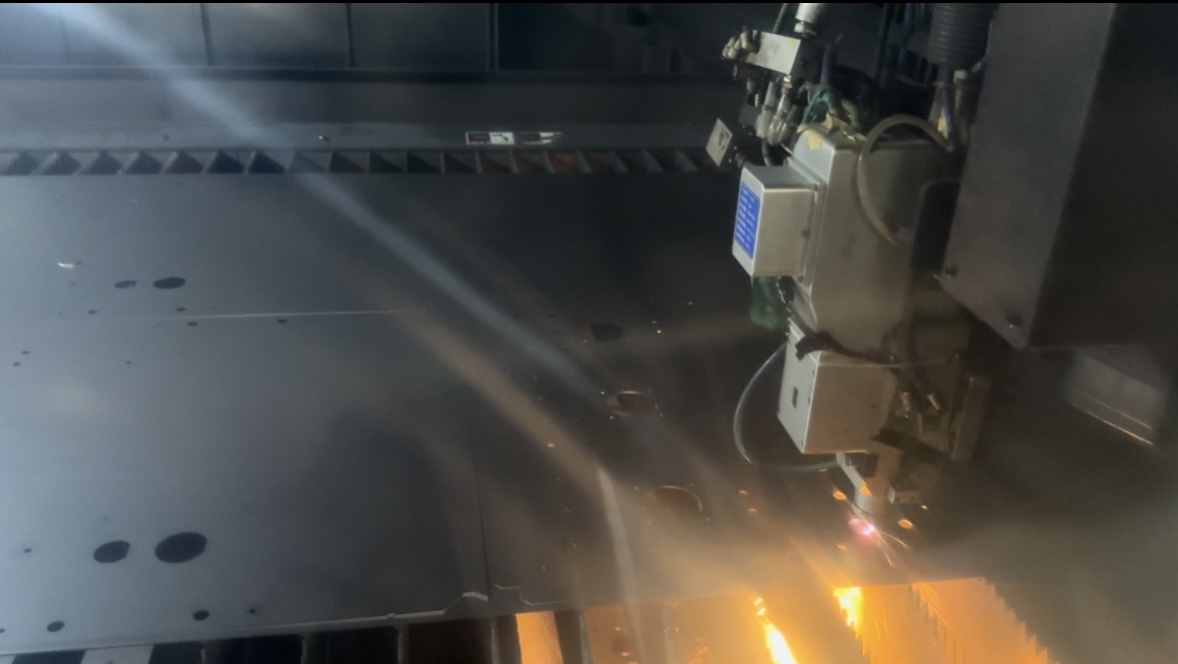
Laser cutting achieves cutting precision at the ±0.1mm level, far superior to conventional plasma or flame cutting. For sheet metal parts requiring subsequent bending and welding, the verticality and burr-free characteristics of the cut edge directly affect yield rates in downstream processes. Laser-cut edges typically require no secondary grinding before entering bending or welding operations—particularly critical for fastener holes, weld bevels, and similar applications.
Elimination of Tooling Dependencies
Conventional stamping requires dedicated dies, with costs ranging from several thousand to hundreds of thousands of dollars and lead times typically of 2–4 weeks. Laser cutting controls the cutting path via CNC programs, where switching part types requires only a program change, enabling truly "tooling-free" flexible production. This characteristic makes it particularly suitable for low-to-medium volume, high-mix order structures, as well as product development phases requiring frequent design iterations.
Material Utilization and Operational Efficiency
Studies show that laser cutting combined with optimized nesting can reduce scrap rates by 30%–40%, achieving higher material utilization through narrow kerf cutting and precise nesting. In fully integrated production line scenarios, Laser Integrated Manufacturing (LIM) solutions can achieve 30%–50% reductions in production cycles, 40%–60% reductions in rework rates, and 50%–70%reductions in equipment footprint.
Technology Evolution: From CO₂ to Fiber Laser to Intelligent Cutting
Fiber Laser Becomes the Dominant Technology
The global laser cutting machine market can be segmented by technology type into solid-state lasers (including fiber lasers), gas lasers, and diode lasers. Solid-state lasers generated USD 3.2 billion in revenue in 2025 and are expected to grow at the fastest rate, with a CAGR of 10%. The core advantages of fiber lasers over conventional CO₂ lasers include: higher electro-optical conversion efficiency (approximately 30% vs. 10%), lower maintenance costs, and stronger cutting capability for highly reflective materials such as aluminum, copper, and brass.
Higher Power and Expanded Thick-Plate Cutting Capability
Increasing laser power is continuously expanding the application boundaries of laser cutting. The power range of mainstream industrial fiber laser cutting machines now covers 3kW to 80kW. The 12kW–30kW range is suitable for balanced production of medium-thickness stainless steel and carbon steel, while 60kW–80kW high-power models target high-volume thick-plate cutting scenarios. High-power lasers enable thick-plate processing that previously relied on plasma or waterjet cutting to now be accomplished with lasers, with superior edge quality.
From Cutting to Multi-Function Integration
The latest trend is the integration of laser cutting and welding into a single processing head. Through "combo head" technology, equipment can rapidly switch between cutting and welding modes without tool changes. This capability is particularly important in tailor-welded blank (TWB) and structural component manufacturing—precisely matched bevels after cutting can proceed directly to welding, eliminating secondary fixturing and alignment operations.
How Laser Cutting Is Changing the Sheet Metal Fabrication Value Chain
Direct Impact on OEM Buyers
For OEM buyers seeking external sheet metal fabrication services, the proliferation of laser cutting has brought several substantive procurement changes:
Compressed Lead Times: From DXF file to finished parts, laser cutting can typically begin production within 24–48 hours, with no waiting for die fabrication. Prototype lead times are typically 5–10 days, while production orders (1,000+ pieces) run 20–30 days.
Greater Design Freedom: Conventional stamping is constrained by die geometry, requiring designers to compromise on manufacturability. Laser cutting eliminates most of these constraints, making complex contours, dense hole patterns, and arbitrary curve designs feasible.
Reassessment of Volume Economics: For medium volumes of 500–5,000 pieces, laser cutting's zero tooling cost makes it superior in total cost to stamping solutions requiring die amortization. Only at very high volumes (typically above 5,000 pieces) does stamping's marginal cost advantage begin to emerge.
Supply Chain Localization and Responsiveness
Falling laser cutting equipment costs—particularly for medium-power fiber laser models—have enabled small and medium-sized fabrication shops to deploy laser capacity. This drives distributed placement of processing capacity, shortening the physical distance between OEM buyers and fabrication suppliers, and supporting faster prototyping iterations and more flexible inventory strategies.
The Next Step: Automation and Intelligence
The efficiency ceiling of laser cutting is increasingly determined not by cutting speed itself, but by loading/unloading speed and Overall Equipment Effectiveness (OEE). Industry data shows that adding a second operator for simultaneous loading and unloading can increase "flame-on time" from 10% to 40%. Intelligent lifting equipment, IoT-integrated material handling systems, and automated nesting software are becoming standard configurations for high-end fabrication shops.
Intelligent monitoring and predictive maintenance represent another key direction. Modern laser cutting systems increasingly incorporate real-time monitoring capabilities, continuously tracking cutting head status, gas quality, and optical components, issuing alerts before failures occur. Shops with standardized operating procedures connected to software systems report fewer errors and faster problem recovery.
Frequently Asked Questions (FAQ)
Q: What metal materials are suitable for laser cutting?
Laser cutting is most commonly used for carbon steel, stainless steel, and aluminum. Copper and brass, due to their high reflectivity, require higher power and calibrated parameters. Carbon steel can be cut up to 25mm+ (depending on power), while practical thickness ranges for stainless steel and aluminum are typically within 20mm. Thicker materials may require waterjet or plasma as alternatives or supplements.
Q: What are typical lead times from prototype to production?
Prototypes and small batches typically take 7–15 days, including material procurement, cutting, and basic inspection. High-volume orders (1,000+ pieces) generally require 20–30 days depending on complexity and post-processing requirements. Expedited services can be compressed to 3–5 days, subject to a premium.
Q: How can I verify a laser cutting supplier's quality capabilities?
We recommend requesting a First Article Inspection (FAI) report from the supplier, focusing on cut edge verticality, burr conditions, and dimensional tolerances. For critical applications, request sample cuts verified with CMM or optical comparators. Where feasible, a small-batch trial production (50–100 pieces) is an effective way to validate supplier consistency.
Q: How is the per-piece cost of laser-cut parts estimated?
Core variables include: material cost, cutting perimeter, material thickness, number of pierces, and tolerance requirements. A simple estimation logic is: material cost + cutting time × machine rate + post-processing cost. Suppliers should provide cutting path optimization strategies when quoting—high material utilization directly reduces per-piece cost. Buyers are advised to request that suppliers demonstrate their nesting strategy, as this is an intuitive indicator of process maturity.
Procurement Action Recommendations: When evaluating sheet metal fabrication suppliers, treat "laser cutting capability" as an independent evaluation dimension, focusing on equipment power configuration, automated loading/unloading level, nesting software capability, and actual data on cut edge quality. For high-mix, medium-volume procurement structures, prioritize suppliers with fiber laser capacity and higher levels of automation.