The Strategic Role of Server Chassis in the Sheet Metal Fabrication Industry
Introduction: Why Server Chassis Matters More Than Ever
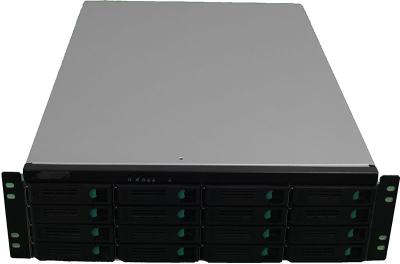
In the global information technology infrastructure ecosystem, the server chassis has evolved from a simple protective enclosure to a critical structural system that determines thermal performance, hardware compatibility, and deployment density. For the sheet metal fabrication industry, this evolution represents far more than a new product category—it signals a fundamental shift in manufacturing standards, precision requirements, and strategic positioning.
As AI workloads accelerate and data centers expand worldwide, the server chassis market is demonstrating steady growth. Industry analysts estimate the global server chassis market at approximately $342 million in 2025**, with projections reaching **$457 million by 2034, reflecting a compound annual growth rate of around 3.25% . While these figures may appear modest compared to broader IT spending, their significance for sheet metal fabricators lies in the technical complexity and value density of each unit produced. A server chassis is no longer a commodity metal box; it is a precision-engineered system integrating structural rigidity, electromagnetic compatibility, thermal management, and modular serviceability.
This article examines the server chassis manufacturing landscape from the perspective of the sheet metal industry—why it matters, how production processes are adapting, and what international B2B buyers should understand when sourcing these critical components.
The Sheet Metal Industry Context: From Commodity to Precision
A Large and Evolving Market
The global sheet metal market remains substantial, valued at $356 billion in 2026** with forecasts approaching **$451 billion by 2030 at a 6.1% CAGR . Steel continues to dominate material demand, accounting for nearly 75% of sheet metal market share in 2025, though aluminum is expanding at a faster pace (8.33% CAGR) as weight reduction becomes critical in electronics and automotive applications .
Within this broad market, the precision sheet metal fabrication segment serving electronics and data infrastructure occupies a strategically important niche. Unlike construction or general industrial applications where tolerances may be measured in millimeters, server chassis fabrication demands sub-millimeter precision, consistent repeatability, and strict process control.
Asia-Pacific as the Manufacturing Epicenter
Asia-Pacific accounted for 48.63% of global sheet metal revenue in 2025, with projected growth at 7.84% CAGR through 2031 . China, Taiwan, and Southeast Asia have become the primary sourcing regions for server chassis fabrication, supported by mature supply chains for cold-rolled steel, galvanized sheet, and aluminum alloys. Taiwan, in particular, hosts several leading server chassis manufacturers that serve major cloud providers and OEMs .
For international buyers, this geographic concentration offers both opportunity and risk. Competitive pricing and manufacturing depth are clear advantages, but supplier qualification and quality assurance require rigorous due diligence.
How Server Chassis Manufacturing Differs from Conventional Sheet Metal Work
The AI Factor: Structural Complexity at Scale
The rise of AI computing has reshaped what a server chassis must accomplish. Traditional 1U and 2U servers were relatively straightforward: a rectangular enclosure with mounting points and ventilation. Modern GPU-dense servers, however, demand chassis designs that accommodate:
Higher thermal loads, requiring optimized airflow pathways or liquid cooling integration
Increased structural rigidity to support heavier components and vibration resistance
Liquid cooling interfaces, including manifolds and cold plate mounting provisions
These requirements push sheet metal fabrication beyond standard cutting and bending. Precision becomes non-negotiable.
Core Manufacturing Processes
A server chassis typically undergoes a sequence of sheet metal operations that must be executed with tight tolerances:
1. Cutting and Blanking
Laser cutting and CNC punching are the primary methods. Fiber laser systems have become the standard for their speed and edge quality, particularly when processing thin-gauge stainless steel or aluminum. For high-volume production, progressive die stamping may be employed, though the low-to-medium volume, high-mix nature of server chassis production often favors flexible laser-based workflows .
2. Forming and Bending
CNC press brakes with precision tooling shape the chassis components. The challenge here is maintaining angular consistency across production runs—even minor variations in bend angle can cause assembly misalignment, particularly in modular chassis designs with tight tolerances. Electric press brakes are increasingly favored for their repeatability and energy efficiency .
3. Welding and Joining
Arc welding, spot welding, and increasingly laser welding are used to assemble chassis frames. For liquid-cooling-compatible chassis, weld quality and leak-tightness become critical, requiring validated welding procedures and testing protocols .
4. Surface Treatment
Electroplating, powder coating, or painting protects against corrosion and provides EMI shielding. For server applications, consistent coating thickness and conductivity are essential for electromagnetic compatibility .
5. Assembly and Quality Control
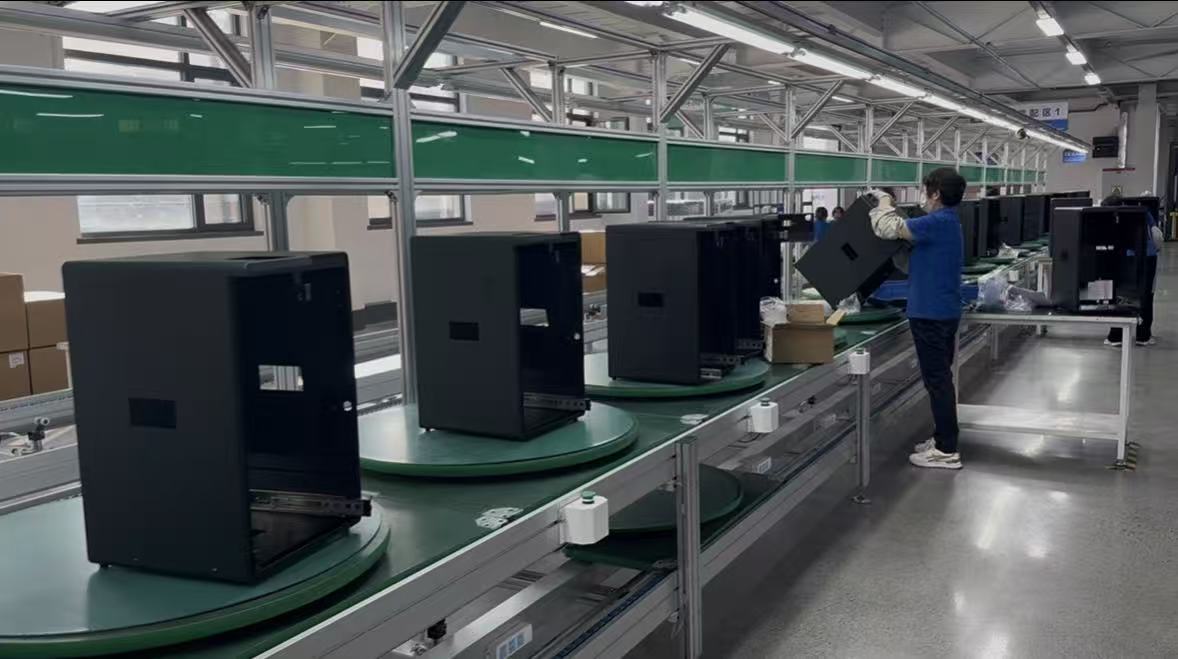
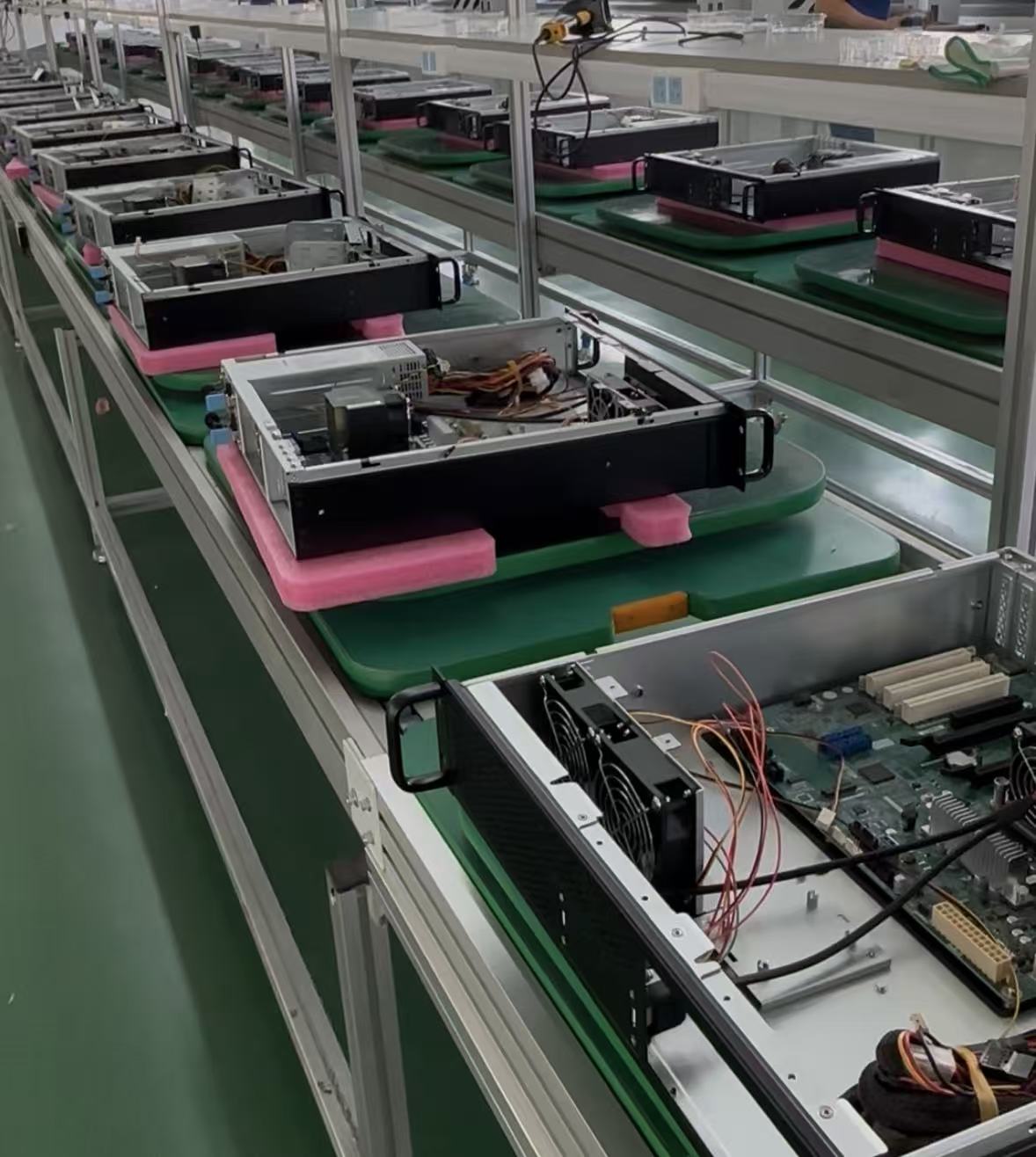
Final assembly integrates mounting hardware, guide rails, EMI gaskets, and ventilation features. Dimensional verification, flatness inspection, and functional testing (including rack-mount fit) are standard quality gates.
Market Trends Reshaping Sheet Metal Demand
Liquid Cooling Drives New Metal Component Requirements
The transition from air cooling to liquid cooling in high-density AI servers is creating demand for entirely new sheet metal categories: cold plates, manifolds (分集水器), and CDU (Coolant Distribution Unit) housings . These components require not only forming precision but also hermetic sealing and compatibility with coolant chemistry.
Industry reports from 2026 indicate that liquid cooling component orders have surged, with some manufacturers reporting near-doubling of order volumes year-over-year . For sheet metal fabricators, this represents a high-value opportunity—but also a technical barrier. Not every fabrication shop has the welding expertise, leak testing capability, or cleanliness controls required for liquid cooling components.
Modularity and Flexibility
Server chassis designs are increasingly modular, enabling configurations across 1U to 4U and beyond while sharing common base structures . This modular approach reduces tooling costs and improves manufacturing efficiency, but it also demands interchangeable component precision—parts manufactured across different production runs must assemble without modification.
Material Shift: Aluminum’s Growing Role
While steel remains dominant, aluminum’s share in electronics enclosures continues to expand. Aluminum offers weight reduction, better thermal conductivity, and corrosion resistance—attributes increasingly valuable in server chassis applications. The challenge for fabricators is adapting processes to aluminum’s different forming characteristics, particularly springback during bending and porosity risks during welding.
FAQ: Common Questions from International Buyers
Q1: What tolerances are typical for server chassis sheet metal fabrication?
For critical dimensions such as rack-mount interface points, mounting hole positions, and component mating surfaces, tolerances of ±0.1 mm to ±0.2 mm are common in precision server chassis work. Non-critical dimensions may allow ±0.5 mm. Liquid cooling components may require even tighter control, particularly for sealing surfaces.
Q2: How does liquid cooling compatibility change chassis manufacturing requirements?
Liquid-cooling-ready chassis require weld leak-tightness, cleanliness (no particulate contamination), and material compatibility with coolant fluids. Fabricators must validate welding procedures, implement pressure or helium leak testing, and control contamination during assembly. This represents a meaningful capability upgrade from standard chassis production.
Q3: What certifications should I look for in a server chassis manufacturer?
Beyond ISO 9001 quality management, look for IECQ QC 080000 (hazardous substance process management) if RoHS compliance is required, and evidence of process capability studies (Cpk) for critical dimensions. For liquid cooling components, documented weld qualification and leak test protocols are essential.
Q4: How has the AI server boom affected lead times for custom chassis?
Lead times vary by complexity and order volume. Standard 1U/2U designs may ship in 4-6 weeks from qualified suppliers, while complex liquid-cooling chassis or new tooling scenarios can extend to 10-14 weeks. Capacity in the precision sheet metal segment has tightened as AI infrastructure demand absorbs available production capacity .
Conclusion
The server chassis occupies a position of strategic importance within the sheet metal fabrication industry that extends well beyond its market size. It represents the convergence of precision engineering, material science, and manufacturing process control—capabilities that define competitive advantage for fabricators serving the data infrastructure sector.
For international B2B buyers sourcing server chassis or related sheet metal components, the key considerations are clear: partner with fabricators who demonstrate documented process capability, experience with liquid cooling-adjacent requirements, and the engineering depth to address thermal, structural, and EMC challenges holistically. The AI-driven evolution of server hardware is accelerating demand for precisely these capabilities.
As the industry prepares for continued growth in AI infrastructure deployment, the fabricators who invest in precision forming, validated welding, and rigorous quality systems will be the ones capable of supporting the next generation of server hardware. The chassis may be metal, but the competitive edge is engineered.