One-Stop Sheet Metal Fabrication for Enclosures and Racks: A 2026 Global Buyer's Guide
Introduction: Why "One-Stop" Is Reshaping Sheet Metal Sourcing
For international B2B buyers, procuring an enclosure or rack has never meant simply "buying a metal box." It involves structural design, material selection, cutting, forming, welding, finishing, assembly, and inspection. Under the traditional model, these stages are scattered across different suppliers—resulting in longer lead times, inconsistent quality, and rising coordination costs.
Over the past three years, global supply chain volatility has amplified these pain points. A growing number of OEMs and system integrators are turning to manufacturers with one-stop sheet metal fabrication capabilities for enclosures and racks—from raw material to finished assembly, under a single point of responsibility, with the entire process controlled in-house. This is not merely an efficiency gain; it is a risk management upgrade.
Market Background: Sustained Demand for Sheet Metal and Enclosures
The global sheet metal fabrication services market was valued at approximately USD 18.5 billion in 2025 and is projected to reach USD 29.85 billion by 2034, growing at a CAGR of roughly 5.5%. Enclosures and racks, as a core application category within sheet metal fabrication, benefit from multiple structural demand drivers.
On the regional front, Asia-Pacific holds a central position in the global sheet metal fabrication services market, with a regional market size of approximately USD 35 billion in 2025 and an expected growth rate of 5.1% from 2026 to 2035. China is both the largest production base and the largest consumption market, with particularly strong demand in industrial electronics, communications infrastructure, and new energy sectors.
In terms of end applications, growth momentum for enclosures and racks is shifting from traditional industry toward emerging sectors. Renewable energy and EV charging infrastructure represent the fastest-growing segments, requiring large volumes of outdoor-rated protective enclosures for solar inverters, battery energy storage management systems, and charging pile power cabinets. Data centers and 5G networks similarly constitute strong demand, with modular rack systems, server racks, and outdoor base station cabinets expanding in procurement scale. In addition, industrial automation, medical equipment, and security surveillance continue to generate steady demand for precision enclosures.
One trend worth noting: buyers are no longer comparing unit price alone. According to industry analysis, procurement decisions are shifting toward evaluating engineering support capability, completeness of quality documentation, delivery reliability, material traceability, and the ability to scale delivery of complex assemblies. This aligns closely with the value proposition of the one-stop production model.
One-Stop Sheet Metal Production: The Full Chain from Drawing to Finished Product
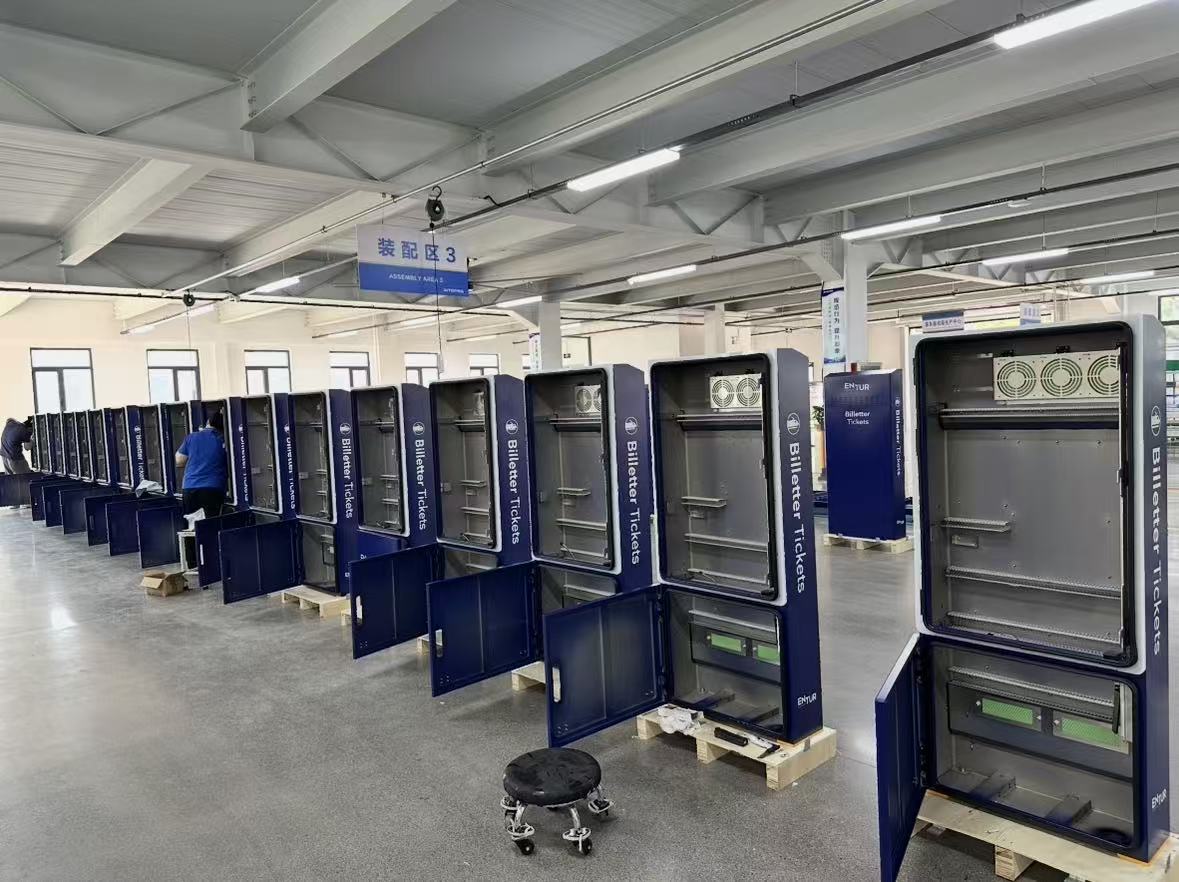
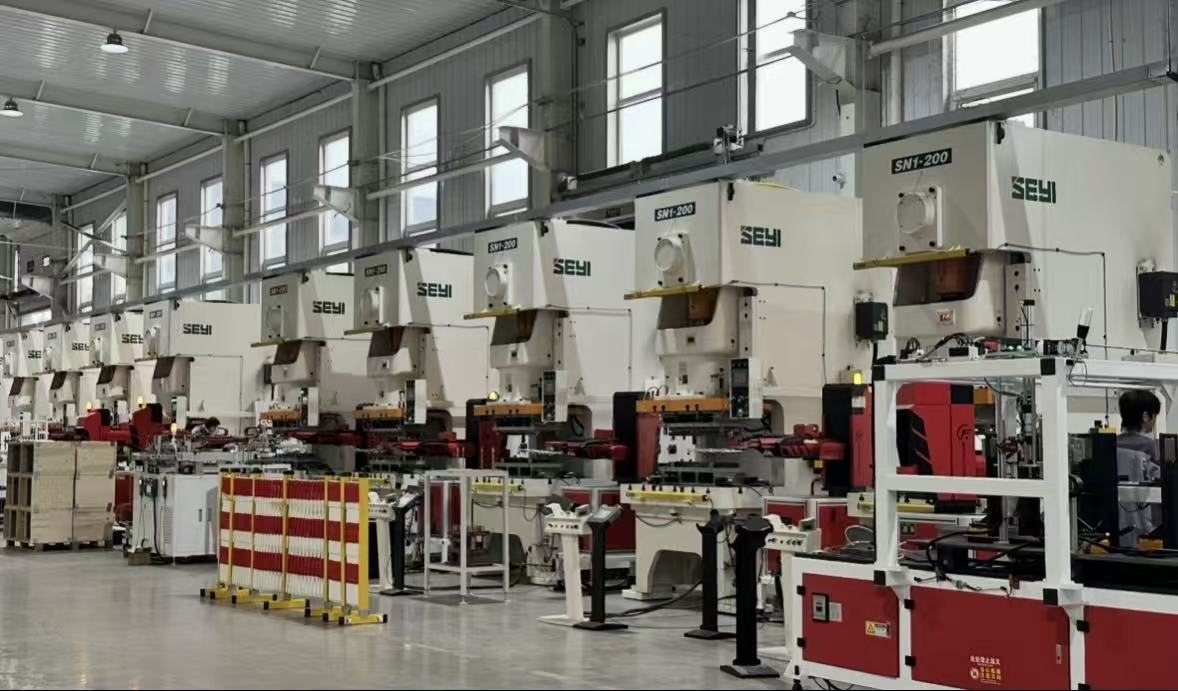
"One-stop" is not simply a stacking of services—it is the vertical integration of critical process stages. A manufacturer truly capable of one-stop fabrication for enclosures and racks should complete the following core processes within its own facility:
Engineering support and DFM review → Laser cutting → CNC bending and forming → Welding and grinding → Surface finishing → Assembly and inspection
Within this chain, in-house control of each stage directly affects final delivery quality. Take welding as an example: the choice between TIG and laser welding, and the ability to control weld distortion, determine both the structural strength and the visual consistency of an enclosure. In surface finishing, in-house capability for powder coating, painting, brushing, and passivation significantly shortens lead times and eliminates color deviation and quality fluctuation caused by outsourcing.
On the technical capability front, modern precision sheet metal fabrication places higher demands on equipment accuracy. Fiber laser cutting can achieve cutting precision of ±0.003 inches, while CNC press brakes with dynamic deflection compensation can hold bending tolerances of ±0.005 inches. For stainless steel enclosures, material springback control and sealed welding are process challenges requiring dedicated equipment and accumulated experience.
Material adaptability is equally critical. Carbon steel, 304/316 stainless steel, aluminum, and galvanized sheet each have distinct processing characteristics and application scenarios. 316L stainless steel suits corrosive environments such as chemical, marine, and food-grade applications, while 304 stainless steel covers most industrial and indoor applications. A one-stop supplier should be able to recommend the optimal material solution based on the customer's application—not merely fabricate to drawing.
Why International Buyers Are Turning to One-Stop Partners
Lead time compression and supply chain simplification are the primary drivers. When all processes flow within a single factory, intermediate waiting and logistics are eliminated. Chinese manufacturers with vertical integration capability can shorten lead times by up to 30% compared with decentralized sourcing. This advantage is particularly pronounced for projects requiring rapid iteration.
Quality consistency is the second value. The more processes are outsourced, the greater the risk of tolerance stack-up and quality standard drift. Under a one-stop model, dimensional inspection, weld seal testing, and salt spray testing can be executed uniformly across the entire workflow. For enclosure products requiring UL, NEMA, or IP rating certification, traceable process records are the foundation of compliance.
Reduced communication costs should not be overlooked either. A single point of contact means technical questions, schedule adjustments, and quality feedback all close within one communication loop. Buyers no longer need to coordinate responsibility allocation among multiple suppliers.
From a supplier evaluation perspective, buyers should focus on several dimensions: whether the factory owns its laser cutting, bending, welding, and surface finishing lines; whether it provides DFM feedback and structural optimization suggestions; whether its quality certification system is complete (ISO 9001 is the baseline); and whether it has experience serving international clients, including export packaging, documentation standards, and understanding of compliance requirements.
Frequently Asked Questions (FAQ)
Q1: Does one-stop sheet metal production mean a higher unit price?
Not necessarily. While a one-stop supplier's quotation may be higher than that of a pure contract fabrication shop, the total cost of ownership is often lower. Decentralized sourcing adds hidden costs in logistics, quality coordination, and quality risk remediation. Moreover, DFM optimization under a one-stop model can reduce costs at the design stage—for example, by unifying bend radii to reduce tool changes or optimizing hole layouts to minimize secondary operations.
Q2: How can I assess whether a supplier truly has "one-stop" capability?
The key is whether its critical processes are completed in-house. Laser cutting, bending, welding, and coating are the four core stages. If any one of them is marked as "outsourced," it cannot be called truly one-stop. We recommend verifying the equipment list and production flow through video factory audits or on-site visits. Factory floor area and monthly capacity data can also serve as reference indicators.
Q3: How does one-stop production differ for stainless steel versus carbon steel enclosures?
The challenges in stainless steel fabrication center on springback control, weld distortion, and surface finishing. Stainless steel exhibits stronger work hardening tendencies, requiring finer adjustment of bending parameters; inadequate control of welding heat input leads to distortion and reduced corrosion resistance. Therefore, a one-stop stainless steel enclosure supplier needs dedicated equipment and process experience—not simply applying carbon steel procedures.
Q4: What is the typical minimum order quantity (MOQ)?
This depends on the supplier's positioning. One-stop factories with flexible production capability can typically accept lower order quantities, with some supporting 10 units or even single-piece prototyping. Price advantages for volume orders then emerge progressively as quantities increase. We recommend confirming MOQ and tiered pricing for the production stage during the prototyping phase.
Conclusion
One-stop sheet metal fabrication for enclosures and racks is transitioning from a "value-added option" to a "baseline requirement." For B2B buyers serving international markets, choosing a manufacturing partner with full-process in-house capability, engineering collaboration mindset, and compliance experience delivers far greater long-term value than chasing the lowest unit price. When screening suppliers, we recommend prioritizing process completeness, quality documentation capability, and a track record of handling complex projects as core evaluation dimensions. To further evaluate a specific project requirement, contact a one-stop sheet metal manufacturer with export experience directly for DFM feedback and a quotation.