Exploring Sheet Metal Fabrication: Global B2B Sourcing Strategies and Market Trends for 2026
Introduction: The Strategic Value of Sheet Metal Fabrication in Global Manufacturing
Sheet metal fabrication is a foundational pillar of modern manufacturing. From automotive bodies and aerospace structural components to data center enclosures and medical device housings, virtually every industrial product relies on precision-formed sheet metal parts. For international B2B buyers, understanding the technological evolution and supply chain dynamics of sheet metal fabrication has become a core competency for optimizing procurement costs and ensuring delivery quality.
According to Research and Markets, the global sheet metal fabrication services market was valued at USD 87.3 billion in 2025 and is projected to grow to USD 136.5 billion by 2035, representing a CAGR of 4.6%. An independent study by Straits Research places the 2025 market at USD 18.5 billion, forecast to reach USD 29.85 billion by 2034 at a 5.5% CAGR. While the variance in figures reflects differences in market scope definitions, the growth consensus is clear: demand for lightweight materials, the electric mobility transition, and infrastructure investment across developing economies are the primary engines driving this expansion.
Industry Background: Technical Scope and Value Positioning
Sheet metal fabrication is a comprehensive cold-working process applied to thin metal sheets—typically under 6mm in thickness—encompassing shearing, punching, bending, welding, riveting, and forming operations. Its core value proposition lies in enabling batch production of structural components with relatively low tooling costs while balancing strength and weight reduction requirements.
For OEM buyers, the strategic significance of sheet metal parts extends far beyond "metal components." As one industry observer noted, purchasing sheet metal parts is essentially buying predictability, repeatability, and coordination—parts that fit on first assembly, where part #200 matches part #1, and where laser cutting precision, bend angles, weld distortion, and coating thickness are all controlled in concert. When these conditions are met, manufacturing becomes "uneventful"—and that is precisely the hallmark of a healthy supply chain.
Market Data: Scale and Structure of Global Sheet Metal Fabrication Services
Regional Landscape and Growth Poles
Asia-Pacific is the largest market for sheet metal fabrication services globally. According to Global Market Insights, the APAC market was valued at USD 35 billion in 2025 and is expected to grow at a 5.1% CAGR from 2026 to 2035. This growth is primarily driven by manufacturing expansion across China, India, and Southeast Asia.
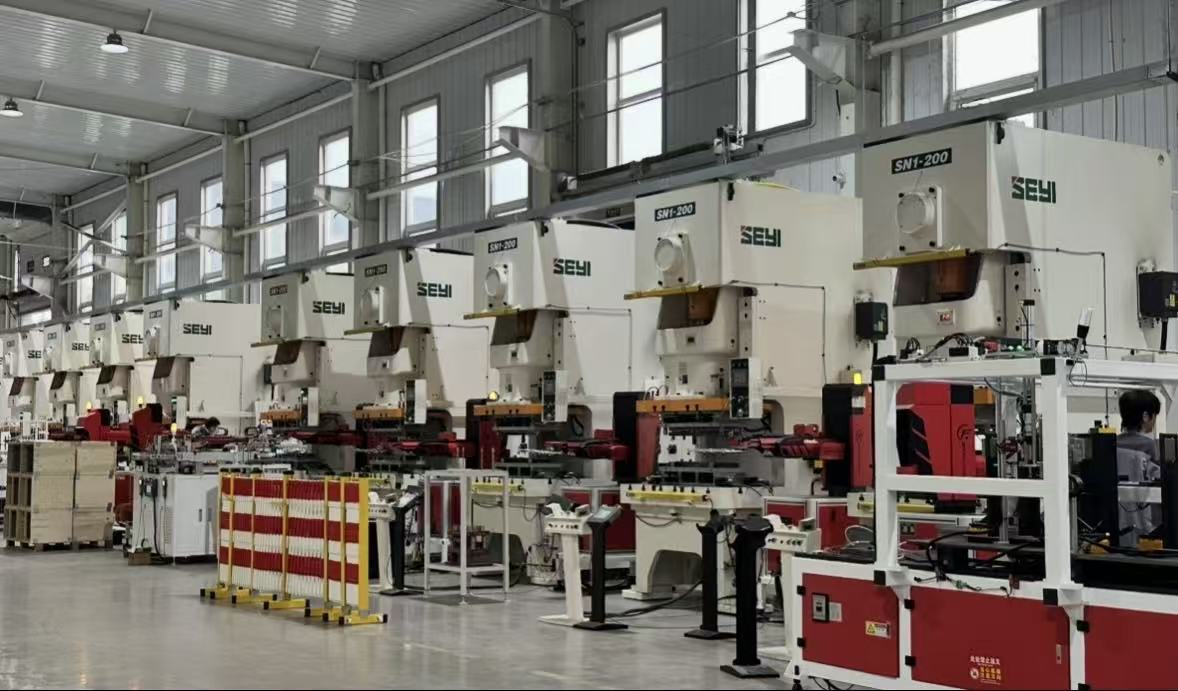
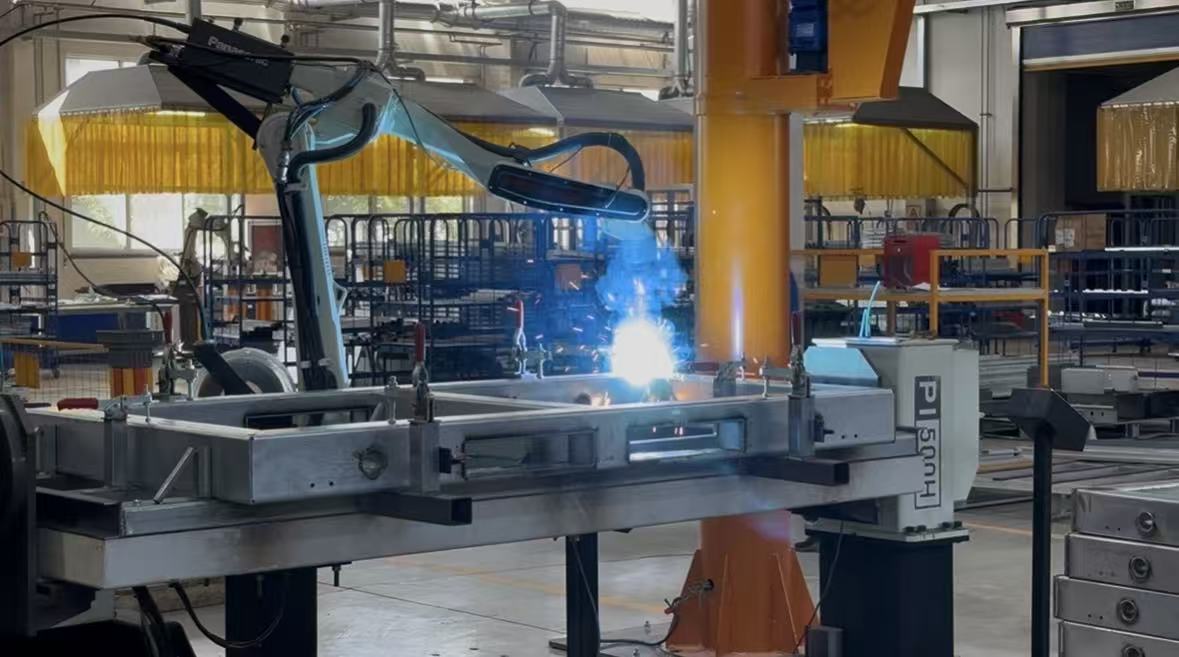
China's dominance in the sheet metal fabrication supply chain is particularly notable. Provinces including Hebei, Shandong, Jiangsu, and Henan have formed concentrated industrial clusters that deliver not only cost advantages but also an integrated ecosystem spanning raw material procurement, precision machining, surface finishing, and logistics. In the Jiangsu Wuxi and Shanghai corridor, for instance, facilities equipped with advanced CNC punching, laser cutting, and robotic welding cells can support complex geometries with sub-millimeter tolerances. Powder coating, anodizing, and plating lines are typically available within 30 kilometers of most workshops, enabling delivery cycle reductions of up to 40% compared to fragmented offshore networks.
Material and Process Structure
From a material perspective, steel remains dominant. Research and Markets reports that steel accounted for 54% of the market in 2025 and is projected to grow at a 4.7% CAGR through 2035. Its strength, cost-effectiveness, and adaptability across industries are the core drivers.
From a process standpoint, stamping is the largest single service category, valued at USD 22.7 billion in 2025 with a projected 4.6% CAGR. However, laser cutting, CNC bending, and automated welding are demonstrating stronger growth momentum, reflecting the market's increasing emphasis on flexible manufacturing, complex geometries, and shorter lead times.
Trend Analysis: Key Forces Shaping Sheet Metal Fabrication in 2026
Digitalization and AI-Driven Productivity Revolution
Sheet metal fabrication is transitioning from traditional manufacturing to data-driven intelligent production. Research and Markets notes that AI-assisted inspection, real-time production visualization, and digital supply chain collaboration are becoming differentiating capabilities for suppliers. Leading manufacturers are leveraging MES systems and supply chain visibility platforms to transform geographic distance into data-linked depth, enabling cross-border collaborative design and production.
The rise of online sheet metal fabrication service platforms exemplifies this trend. QYResearch data shows the global online sheet metal fabrication services market reached USD 3.846 billion in 2025, projected to grow to USD 5.810 billion by 2032 at a 6.1% CAGR. Platforms such as Xometry, Protolabs, and RapidDirect are significantly lowering the procurement threshold for low-volume, high-mix sheet metal parts through digital quoting and order management.
Supply Chain Resilience and the Nearshoring/Friendshoring Dialectic
Global supply chain restructuring has not diminished the attractiveness of China's sheet metal industrial clusters. On the contrary, leading exporters are deepening collaboration with global customers through digital transformation, converting "geographic distance" into "data-linked depth." Customs data research indicates that exporters capable of delivering small-batch, multi-frequency, rapid-turnaround services demonstrate significantly stronger order stability and customer retention.
Meanwhile, procurement decision criteria are undergoing a fundamental shift. Research and Markets explicitly states: "Buyers no longer select suppliers based on unit price alone, but rather evaluate engineering support, quality documentation, delivery reliability, material traceability, production flexibility, and the ability to scale complex assemblies."
Green Trade Barriers Reshaping Export Thresholds
The anticipated impact of policies such as the EU Carbon Border Adjustment Mechanism is already reflected in trade practices. Sheet metal products manufactured with low-carbon processes, eco-friendly coatings, and recyclable design characteristics are demonstrating clear advantages in export pricing power and market access. Green compliance has evolved from a "bonus point" to an "entry requirement."
Technology Overview: From Flat Sheet to Functional Assembly
Understanding the core processes of sheet metal fabrication enables buyers to communicate more precisely during the RFQ stage.
Cutting: Where Precision and Efficiency Begin
Laser cutting is the predominant cutting method in precision sheet metal fabrication today, suitable for complex contours and rapid iteration. CO₂ lasers are suited for thicker materials, while fiber lasers offer advantages in speed and energy efficiency for thin sheets. CNC punching excels in high-volume production of repeating patterns, and shearing is appropriate for straight-line cuts.
Specifications buyers must clarify include: deburring requirements, edge condition (especially for hand-held components), and whether micro-tabs need to be retained.
Bending: Angle Precision and Springback Control
Bending is the plastic deformation of flat metal around a straight axis. One side of the neutral axis plane undergoes tension while the other undergoes compression. The core challenge in bending is springback control—the elastic recovery of metal after forming force is released, causing angular deviation.
The industry-standard bend angle tolerance is ±0.5°, with precision fabrication achieving ±0.1°. Effective compensation for springback is achieved through optimizing bend stroke, tooling geometry, punch/die clearance, and employing over-bending or bottoming techniques.
Joining: Welding, Riveting, and Clinching
The choice of joining process directly impacts structural integrity and cosmetic quality. MIG/TIG welding provides high-strength sealed joints but carries heat distortion risk; spot welding is fast but cosmetically limited; riveting and clinching avoid heat-affected zones and suit visible surfaces.
The key principle: identify the A-surface and allow alternative joining methods to reduce distortion risk.
Surface Finishing: Unifying Function and Aesthetics
Powder coating provides durable color finishes but requires attention to film thickness impact on hole diameters and fits. Anodizing applies only to aluminum, passivation only to stainless steel. Galvanized steel (SECC/SGCC) offers inherent corrosion resistance, but weldability varies with zinc coating thickness.
Sourcing Strategy: A Supplier Evaluation Framework for B2B Buyers
Technical Capability Audit
Top-tier suppliers should possess full-process capabilities: laser cutting (up to 25mm thickness), CNC bending (±0.1mm precision), MIG/TIG welding, and secondary operations including sandblasting and fire-resistant coating. DFM (Design for Manufacturing) feedback capability is the key differentiator between professional suppliers and ordinary job shops—suppliers who can optimize part geometry, reduce waste, and lower assembly costs deliver value far beyond "build-to-print" execution.
Practical Quality Verification Methods
ISO 9001 is the baseline, but deeper verification is indispensable. Material Test Certificates (MTCs) should be available upon request, conforming to ASTM A653 (galvanized steel) or EN 10088-2 (stainless steel grades). For critical applications, insist on third-party inspection covering weld penetration, dimensional consistency, and coating thickness.
Video audits are emerging as an effective alternative for verifying equipment capabilities and workflow organization. Traceability documentation—such as mill test reports for SS304 or SS316 stainless steel—should be readily available.
Frequently Asked Questions (FAQ)
Q1: How should I evaluate a sheet metal fabrication supplier's technical capabilities?
A: We recommend a structured assessment across four dimensions: Technical Capability (is the equipment list specific? is DFM support available?), Quality Systems (are ISO certificates verifiable? are MTCs provided?), Responsiveness (is response time ≤4 hours? is there a designated engineer?), and Operational Reliability (is on-time delivery ≥95%? is repeat order rate ≥40%?). Avoid making decisions based on quotation alone.
Q2: What is a reasonable MOQ for low-volume sheet metal parts?
A: Industry practice is shifting. Suppliers in China's major industrial clusters commonly support MOQs as low as 1 piece, particularly for non-stamped assemblies. Prototype-stage unit prices typically range from $0.01–$1.00 per piece (depending on complexity and material), dropping to $0.08–$0.60 per piece at mid-volume (300+ units). The key is whether the supplier can bridge prototype and low-volume production without changing processes.
Q3: How can I mitigate lead time risks in sheet metal fabrication?
A: The primary sources of lead time risk are material waiting and finishing queues. Mitigation strategies include: standardizing material and finish specifications to reduce variants, pre-approving samples, and providing clear revision control. Additionally, selecting suppliers with in-house surface finishing capabilities can significantly shorten cycles—fragmented outsourced networks can result in lead times up to 2.5 times longer than integrated factories.
Q4: What are the key cost drivers in sheet metal fabrication quotations?
A: Five cost components: Material (grade, thickness, sheet utilization), Cutting Time (contour perimeter, hole count), Bending (bend count and setups), Welding & Hardware (weld length, insert count), and Finishing & Inspection. Batch size is a multiplier—setup costs are amortized across the lot, so unit price drops steeply then plateaus as volume increases. Simplifying geometry, consolidating operations, and tightening tolerances only where necessary are cost reduction levers buyers can actively implement.
Conclusion: Building Long-Term Competitiveness in Sheet Metal Fabrication Supply Chains
The global sheet metal fabrication services market is at a critical inflection point of structural upgrading. Digital tools have lowered information barriers to cross-border sourcing, yet gaps in supplier capability remain significant. For international B2B buyers, competitive advantage no longer comes from finding "the cheapest quote," but from building verifiable, scalable, and collaborative supplier relationships.
Whether seeking a precision sheet metal fabrication partner with DFM capabilities or optimizing an existing supply chain's cost structure and delivery reliability, a systematic evaluation framework and clear technical specifications remain the cornerstones of successful procurement. We recommend procurement teams begin with pre-release specification reviews—eliminating ambiguity, setting reasonable tolerances, and defining acceptance criteria. This is often the single most effective action for reducing total cost of ownership.