Sheet Metal Fabrication: The Silent Backbone and Growth Engine of Modern Manufacturing
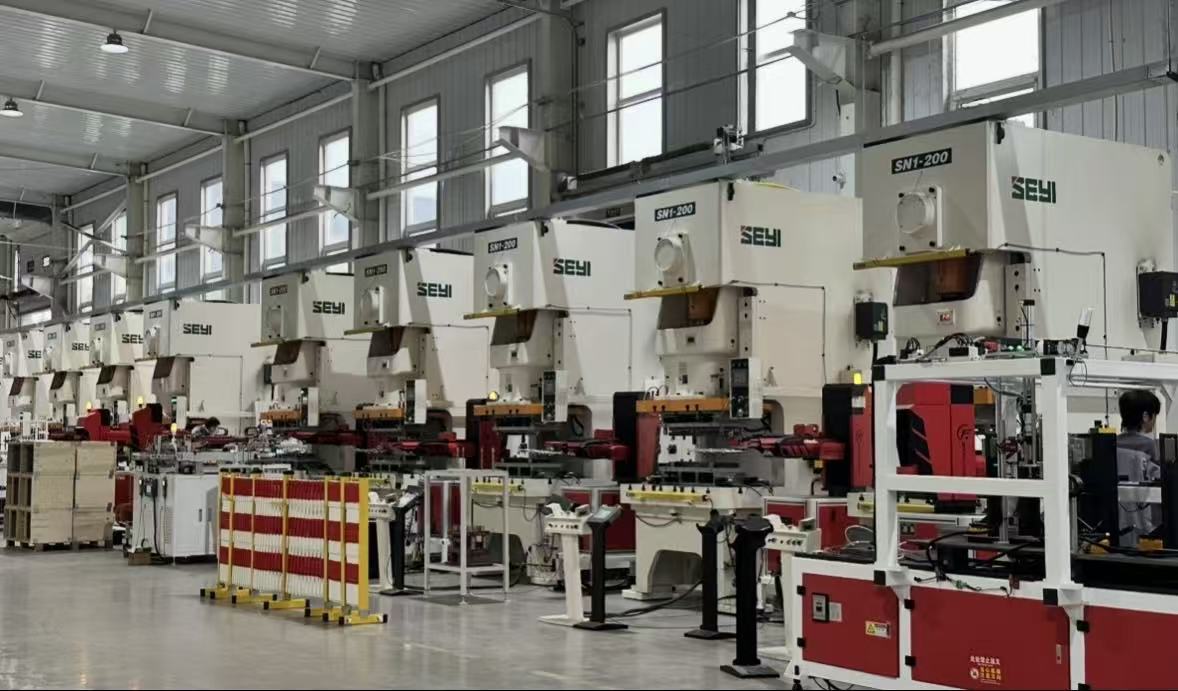
In the complex ecosystem of global manufacturing, certain critical processes rarely make headlines yet underpin the operation of virtually every industrial sector. Sheet metal fabrication is precisely such a silent backbone—it defines the fundamental form of everything from automotive bodies to data center racks, from medical device enclosures to aerospace precision structures. As the global sheet metal fabrication services market reaches $87.3 billion in 2025** and is projected to surpass **$136.5 billion by 2035 at a 4.6% CAGR, understanding the strategic value of this industry has become essential for international B2B buyers.
1. Sheet Metal Fabrication: The Universal Language of Manufacturing
The reason sheet metal fabrication occupies an irreplaceable position in manufacturing lies in its unique balance between material economy and design flexibility. Thin-gauge metal is produced at low cost and massive scale through continuous rolling, then transformed into end products via secondary forming processes. This pathway endows sheet metal parts with a combination of high elastic modulus and high yield strength, delivering exceptional performance in stiffness and strength-to-weight ratio.
This combination of properties explains why sheet metal fabrication penetrates such a broad range of industries. Automotive is the largest end-user of sheet metal fabrication services, relying on stamping and forming for everything from body panels to structural components. Electronics utilizes sheet metal for chassis, racks, and thermal management assemblies. In the rapidly expanding data center sector, sheet metal fabrication has been elevated to new prominence—the expansion of AI and machine learning infrastructure has generated massive demand for precision server racks, enclosures, and integrated mechanical assemblies, often involving complex assemblies, tight tolerances, and frequent engineering revisions.
At the process level, sheet metal fabrication encompasses a series of highly specialized technical pathways. In cutting, CNC laser cutting leverages non-contact processing to achieve tolerances of ±0.005 inches or tighter, with fiber lasers suited to thin-gauge and highly reflective materials, and CO₂ lasers preferred for thicker gauges. In forming, bending is one of the most core processes, using press brakes to bend sheet along a straight axis—though springback remains a persistent precision challenge requiring precise tooling design and parameter compensation. In joining and finishing, from MIG/TIG welding and spot welding to anodizing and powder coating, fabricators are bringing more value-added operations in-house to reduce outsourcing dependence and shorten lead times.
2. Market Landscape: Asia-Pacific Leads as Demand Structure Evolves
The regional distribution of global sheet metal fabrication services clearly maps the center of gravity in manufacturing. Asia-Pacific dominates with a market size of $35 billion in 2025, and is expected to lead global growth at 5.1% CAGR from 2026 to 2035. China and India are the twin engines of this growth, with the former seeing continued demand for precision sheet metal driven by expansion in electric vehicles, urban housing, and renewable energy. According to International Energy Agency data, China's EV production is estimated to reach 12.4 million units in 2024, each requiring substantial quantities of precision-engineered sheet metal components.
Europe follows with a market size of $20.7 billion**, its 4.1% expected growth rate reflecting the steady demand of a mature industrial base. **North America** exhibits a highly concentrated profile—the United States contributes **80%** of the region's share, with 2025 revenue of approximately **$19 billion. The Middle East and Africa market, while smaller at around $3 billion, shows 3.6% growth indicating a gradually solidifying industrial foundation.
On the material front, steel remains the most widely used material in sheet metal fabrication, holding 54% market share in 2025, its durability, cost-effectiveness, and adaptability being irreplaceable. Aluminum continues to penetrate on the strength of lightweighting demands, particularly in EVs and aerospace. Stainless steel maintains essential demand in scenarios requiring corrosion resistance, such as food equipment, medical devices, and chemical processing.
One trend worthy of close attention is the regional restructuring of supply chains. Geopolitical uncertainty and past supply chain disruptions are prompting companies to relocate production closer to end markets. Reshoring initiatives in the US and Europe have increased local capacity investment, with governments deploying fiscal incentives to accelerate this process. Connecticut's allocation of $2.5 million to TRUMPF in May 2025 to strengthen domestic manufacturing capability is a microcosm of this trend. For buyers, this means supplier evaluation frameworks must now incorporate regional delivery resilience as a new dimension.
3. Technology Evolution: Automation and Digitalization Redefine Competitive Barriers
The technology frontier of sheet metal fabrication is being redefined by two forces: automation and digitalization. The proliferation of robotic bending cells has significantly improved the economics of high-mix, variable-volume production. Take Cadrex's deployment at its Monterrey facility as an example: six servo-electric press brakes equipped with six-axis robots and a seventh-axis rail achieve greater statistical process control capability and production flexibility. Automated hardware embedding systems integrating force monitoring and vision systems support "lights-out production" models, liberating labor from repetitive operations while making zero-defect targets achievable.
Divergence in cutting technology also merits attention. For relatively simple parts, CNC turret punch presses retain an efficiency advantage in high-volume production with hundreds of strokes per minute. Laser cutting dominates in complex geometries and high-precision scenarios, particularly fiber lasers on thin-gauge and reflective materials. The emergence of combination punch-laser machines allows manufacturers to leverage both punch speed and laser flexibility on a single platform.
More transformative still is the progress in composite forming technologies. NIPPON KINZOKU's recent full-scale rollout of "Fine Profile" precision profile rolling technology, which combines roll forming with stamping to achieve near-net-shape processing, significantly reduces material waste and shortens the customer's manufacturing flow. This "near-net-shape" philosophy represents the direction of sheet metal fabrication's transition from "selling machine hours" to "selling engineering capability."
4. The B2B Procurement Perspective: Core Dimensions of Supplier Evaluation
For international B2B buyers, the decision to select a sheet metal fabrication partner is far more complex than unit price comparison. Leading procurement organizations are building evaluation frameworks around the following dimensions:
End-to-end in-house capability is the primary consideration. Suppliers with a complete chain from laser cutting, CNC punching, bending, and welding (MIG/TIG/spot) to surface treatment (anodizing, nickel plating, zinc plating, RAL-matched powder coating) can achieve tighter tolerances and faster turnaround while reducing quality variability and delay risks associated with subcontractor dependence.
Verifiable operational metrics are more persuasive than certification certificates alone. On-time delivery rates above 95%, repeat order rates exceeding 30%, and response times under 5 hours reflect a supplier's actual execution capability and customer satisfaction. Material traceability and compliance documentation (RoHS, REACH, FDA) are indispensable in regulatory-sensitive industries.
Order flexibility is particularly critical during product development phases. Many Chinese suppliers now accept single-piece minimum orders, enabling buyers to validate forming, fit, and surface finish before committing to volume production. This offers irreplaceable value during prototyping and iterative design stages.
Frequently Asked Questions (FAQ)
Q1: What are the most common materials in sheet metal fabrication, and how should they be selected?
Steel is the most widely used material (54% share in 2025), as its balance of strength and cost-effectiveness suits most structural applications. Stainless steel is irreplaceable in corrosion-resistant scenarios, while aluminum excels in EV and aerospace applications where lightweighting is critical. Selection criteria should include mechanical property requirements, environmental exposure conditions, weight constraints, and surface treatment compatibility.
Q2: What are typical lead times from prototype to mass production?
At the prototype stage (single piece to small batch), typical lead times from Chinese suppliers range from 5 to 15 days, depending on complexity and surface treatment requirements. Mass production lead times are affected by order volume, tooling preparation, and material procurement cycles. Buyers are advised to communicate capacity reservations with suppliers early to avoid peak-season bottlenecks.
Q3: How can a supplier's precision capability be evaluated?
Key indicators include the range of material thicknesses that can be processed (typically 0.3mm to 10mm) and tolerance levels (±0.1mm is considered a precision-grade benchmark). Requesting first article inspection reports, CMM measurement data, and weld integrity test documentation is an effective way to verify precision claims.
Q4: How does the supply chain regionalization trend affect sheet metal sourcing strategy?
Companies are diversifying supply sources, seeking balance between cost competitiveness and delivery resilience. Asia-Pacific retains scale and cost advantages, but domestic capacity investment in North America and Europe is increasing. A dual-track strategy of "core supplier + regional backup" is recommended to maintain cost efficiency while mitigating geopolitical and logistical disruption risks.
Conclusion
The value of sheet metal fabrication lies not in its visibility, but in its indispensability. As electric vehicles, AI data centers, and renewable energy infrastructure continue to expand, demand for precision, reliable, and traceable sheet metal components will only deepen. For international buyers, establishing long-term relationships with sheet metal fabrication partners possessing end-to-end engineering capability, verifiable quality systems, and regional delivery resilience has evolved from a cost-optimization option to a necessary component of supply chain strategy. Contact our engineering team today to receive a DFM analysis and quotation tailored to your specific application.