The Unseen Value of Manual Precision: Why Skilled Operators Still Define Excellence in Sheet Metal Bending
Introduction: The Human Element in a High-Tech Industry
As the global sheet metal bending market continues its upward trajectory—with the precision metal bending services sector alone projected to grow from $1.51 billion in 2025 to $2.31 billion by 2032—a crucial debate is unfolding .
While automation and robotics dominate industry headlines, there is a growing recognition of the irreplaceable value of manual sheet metal bending. For many international B2B buyers, the choice between a fully automated robotic cell and a skilled operator at a manual press brake is a strategione, balancing volume against the nuances of quality, flexibility, and cost.
The True Cost of Full Automation
There is no doubt that automated bending cells offer significant advantages for high-volume, low-mix production. They provide consistent repeatability and can operate in "lights-out" environments. However, this technology is not a panacea. The industry has identified several critical pain points with robotic bending, including high capital investment, long setup times for new jobs, and a lack of adaptability when dealing with material inconsistencies .
One of the most significant challenges is that automation can sometimes mask underlying material problems. If the tensile strength of a steel batch varies—a common occurrence in commercial-grade materials—a robot will blindly follow its program. A skilled human operator, however, can detect these variations and compensate in real-time, adjusting the bend to achieve the required angle despite the material's springback .
This is where manual sheet metal bendingdemonstrates its enduring value: it is not about a lack of technology, but about the intelligent application of it.
The Return of the Craftsman: Why Manual Operation Matters
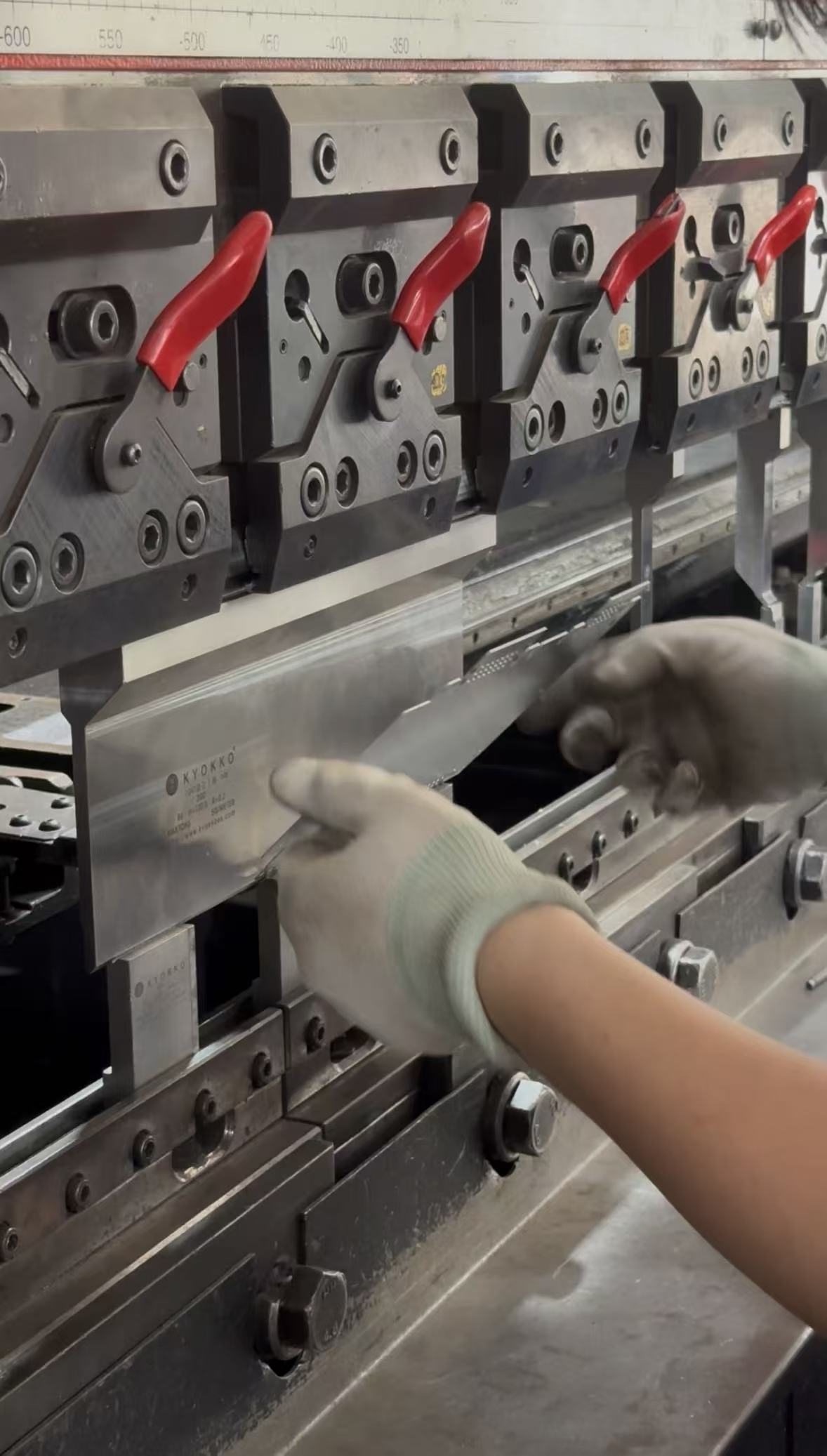
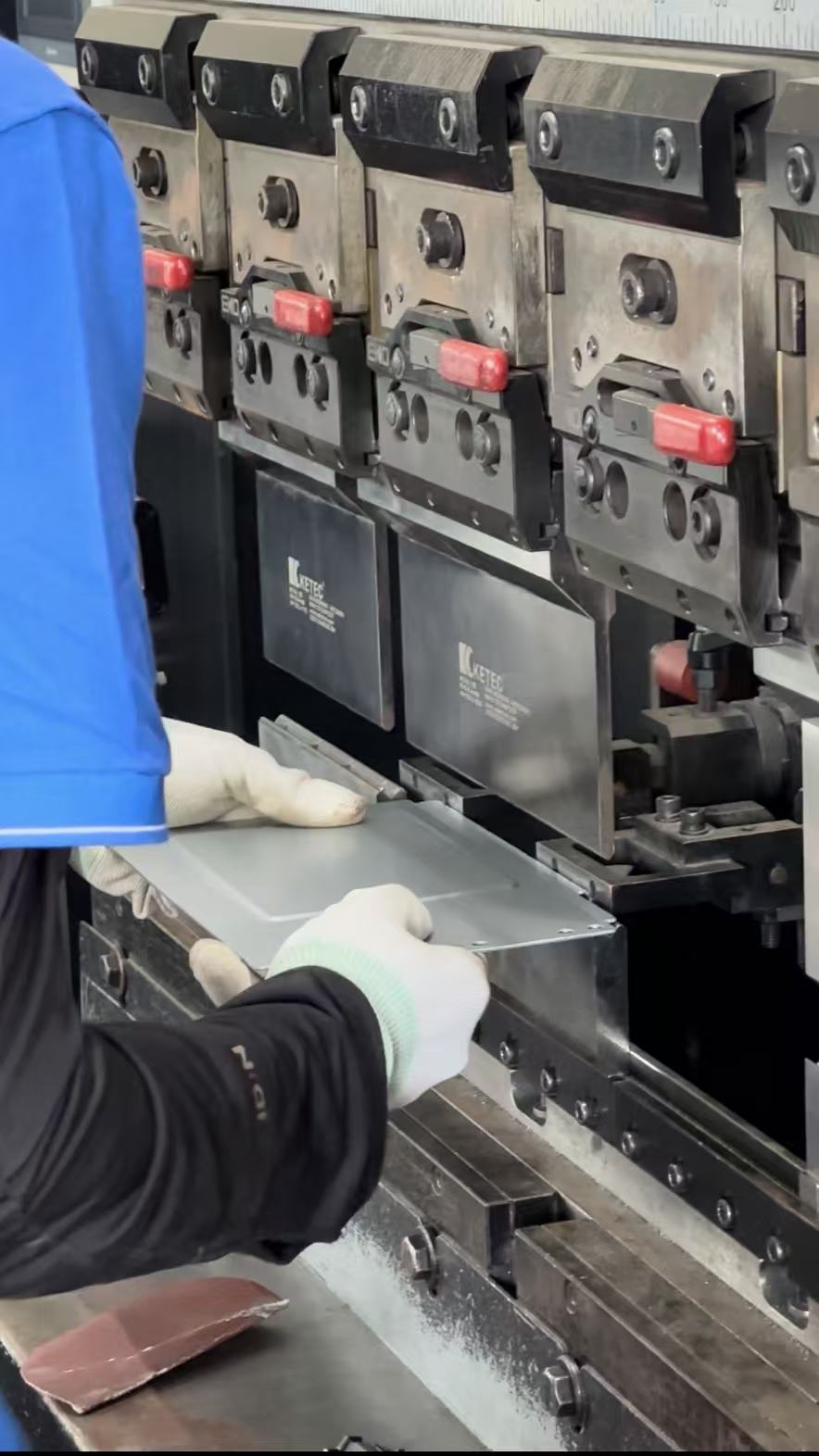
The term manual bending often conjures images of rudimentary tools. While a manual sheet metal bending machine is a critical tool for basic work, modern "manual" operation typically refers to operator-controlled hydraulic press brakes. This approach provides a level of control and problem-solving that is difficult to replicate with a robot .
1. Unmatched Flexibility
In a manufacturing environment characterized by small batch sizes and diverse job orders, the ability to quickly switch between jobs is paramount. Setting up a robotic cell for a new, complex part can take hours. A skilled operator on a sheet metal bending machine can review the drawing, adjust tooling, and produce a perfect first-off part in a fraction of the time .
2. Addressing the Physical Limits of Metal
The physics of bending—springback, minimum bend radius, and minimum flange length—are not just engineering concepts; they are physical realities that operators manage daily .
When a design calls for a bend that approaches the material's ductility limit, a robot cannot "feel" the material tearing. An experienced operator can ease into the bend, adjust pressure, and sometimes even salvage the part. This skill is critical for avoiding costly scrap and ensuring structural integrity.
3. The "K-Factor" Conundrum
Design engineers often use a generic K-factor (the ratio of the neutral axis to material thickness) to calculate flat patterns. However, this value varies based on material, thickness, and tooling. Leaving the K-factor unspecified in a design effectively outsources the final part geometry to a vendor's default software—a potentially disastrous gamble.
A skilled operator collaborates with engineers to calibrate the K-factor, ensuring the final part fits perfectly from the start.
The Sheet Metal Bending Process: From Blueprint to Final Part
The success of a sheet metal bending project is determined long before the metal touches the die. The process is a collaboration between design and craftsmanship.
1. Design for Manufacturability (DFM): Good design ensures the part is physically possible to make. This includes adhering to sheet metal design rules, such as ensuring the minimum flange length is at least four times the material thickness. This prevents the part from slipping into the die during the bend.
2. Material Selection: The choice of material—from mild steel to high-strength alloys—dictates the bending strategy. Different materials have different springback characteristics and require different tooling. An operator must be able to adjust for these properties.
3. Tooling and Setup: The inside bend radius is a function of the punch radius, while the die opening—typically eight times the material thickness for standard steel—determines the tonnage required and the final outside radius . The operator selects the appropriate tools and sets the backgauges for precise positioning.
4. The Bend: The operator executes the bend, often using multiple passes for complex shapes. While the press provides the power, the operator's skill guides the process, compensating for springback and ensuring the final angle meets the specification.
Industry Trends: The Rise of Smart Manual Machines
The future of sheet metal bending is not a choice between man and machine, but the integration of human intelligence with smart technology. The market is seeing a rise in hydraulic manual sheet metal bending machines that retain the flexibility of manual control while offering data-driven support .
Trend 1: Data-Driven Operator Support
Modern press brakes are equipped with angle measurement systems that provide real-time feedback. Instead of the machine auto-correcting (masking material inconsistencies), the data is presented to the operator. This empowers them to make informed decisions about when and how to adjust for springback.
Trend 2: Cost-Effective Precision
For many workshops, a fully automated bending cell is an unaffordable luxury. The manual sheet metal bender, equipped with CNC-controlled backgauges, offers a perfect balance. It provides the precision needed for tight tolerances without the prohibitive cost of robotic integration. As one source notes, this offers the "precision of automated systems at a lower cost," making it ideal for "workshops requiring flexibility without full automation" .
Trend 3: The Modular Approach
Modular tooling and standardized setups are reducing the time it takes to change over a manual sheet metal bending machine. This enhances its efficiency in high-mix, low-volume production environments, making it a formidable competitor to robotic cells in terms of overall equipment effectiveness (OEE).
Conclusion: Investing in Skill, Not Just Speed
The advancements in bending technology are impressive, but they must be viewed through the lens of practical manufacturing. While a robotic cell excels at producing thousands of identical parts, a skilled operator on a manual sheet metal bending machine offers the agility, problem-solving ability, and human intelligence required to handle the complexities of modern, high-mix production. The key is to invest in the right combination of technology and craftsmanship.
FAQ: Addressing Common Concerns in Sheet Metal Bending
Q1: What is the most common mistake in designing parts for sheet metal bending?
A: The most frequent oversight is failing to account for the bend's physical constraints. This often involves specifying a minimum flange length that is too short—typically less than four times the material thickness—which causes the part to fall into the die during the bending process. Another common error is placing holes too close to the bend line, leading to deformation Good DFM analysis before production is essential to prevent these costly errors.
Q2: Is manual bending less accurate than robotic bending?
A: Not necessarily. A modern hydraulic manual sheet metal bending machine, especially one with CNC-controlled backgauges, can achieve extremely tight tolerances. While a robot may provide more consistency over a long run, a skilled human operator can often achieve greater accuracy on the first part by adjusting for variables like material springback and thickness variations in real-time—something a robot cannot do without expensive, complex feedback systems.
Q3: How does material thickness affect the bending process?
A: Material thickness is a primary driver of all bending parameters. It determines the required tonnage, the appropriate die opening (the 8x rule), and the minimum bend radius to avoid cracking. Thicker materials require more force and are more prone to springback, making the skill of the operator—or the sophistication of the machine—crucial for achieving a precise, repeatable angle.
Q4: Can an operator overcome the problem of springback?
A: Yes, a skilled operator can effectively manage springback. They can apply "over-bending," where the metal is bent past the desired angle so it springs back to the correct one. They can also use techniques like "coining," which uses the punch to physically imprint the metal at the bend line, relieving internal stress and improving angular accuracy. Automation can attempt to manage springback, but it cannot fully replace the operator's ability to visually inspect and adjust for material anomalies